


The Tijuana River drainage canal slopes down from sprawling barrios to slice through the city center marking the border and then crossing into the United States, where it spews sewage near Imperial Beach. This binational waterway also highlights a perilous problem that links the the two nations - opioids.
Homeless people sleep in nooks and crannies in the concrete channel, many of them addicts. Dealers have long hawked heroin and crystal meth there but now they are increasingly selling the more perilous fentanyl.
Many of the homeless and addicts line up at the “Father Chava” soup kitchen close by. I talk to them about the fentanyl and they refer to “las pastillas” – the pills - or to “medicina.”
“It’s medicine to help the pain,” says Roberto, a 51-year old user in a white t-shirt turned yellow. “I’ve got a lot of pain. I’ve been shot. I’ve had my bones broken.” He shakes his head and shrugs. “I don’t want to talk about me.”

Fentanyl trafficking is a hot (and tragic) political issue in the United States after a record 71,000 deaths from synthetic opioids in 2021, out of more than 107,000 overdose deaths overall. Mexican cartels move a huge amount of the opioids, which they often import from China, or they import precursors and make fentanyl in Mexico.
In fiscal year 2022, U.S. agents seized more than 14,000 pounds of fentanyl on the Mexican border, a five-fold increase compared to 2019. There is now much more fentanyl seized than heroin, as well as more crystal meth than cocaine, showing that cartels have shifted the core of their business from plant-based to synthetic drugs.
In most of Mexico, however, there is only a limited amount of fentanyl offered to users on the street. This is partly because the cartels themselves ban the sale of it in many places, according to dealers I have spoken to. Tijuana, though, is an exception, and here fentanyl has become rife.
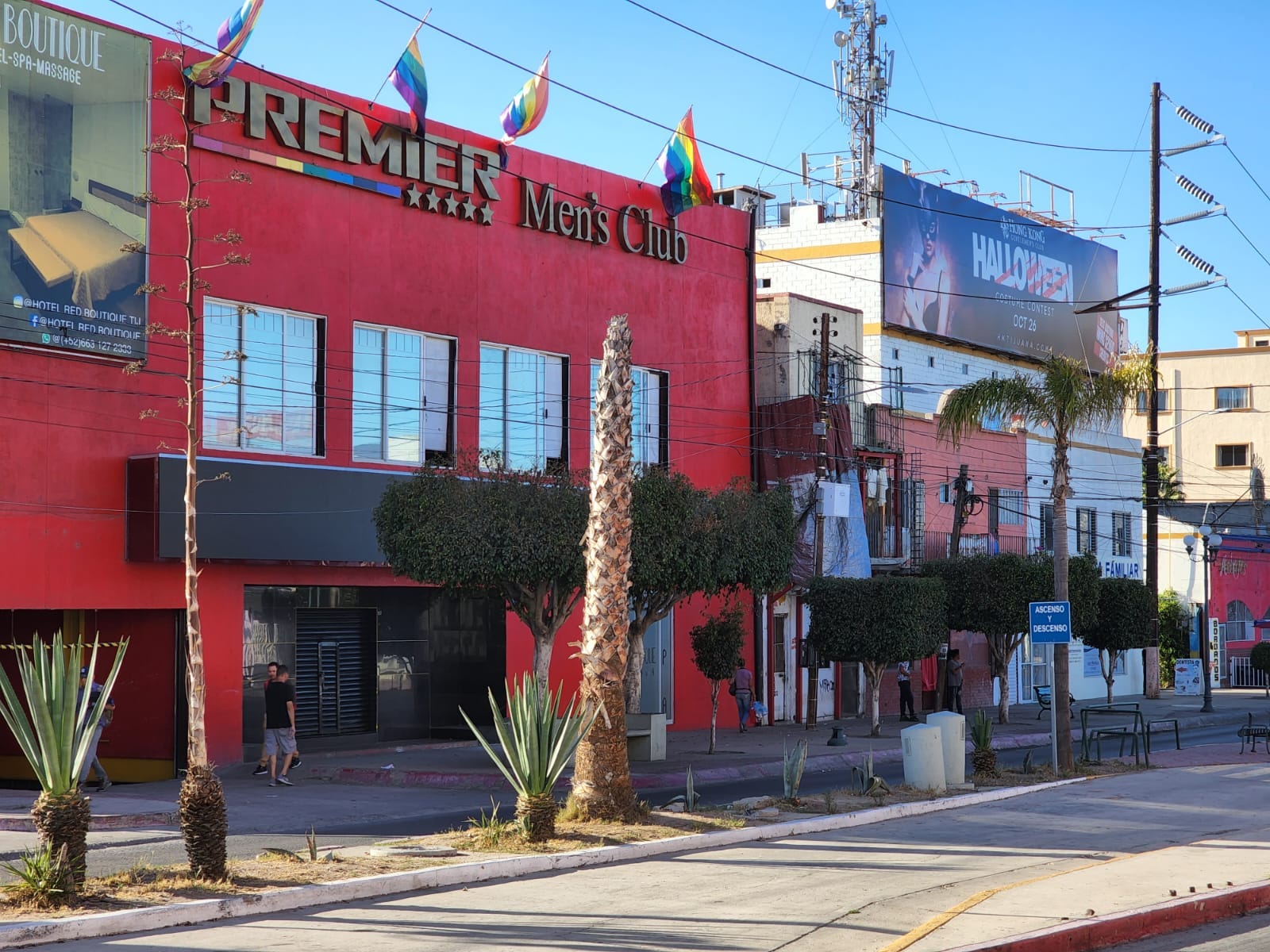
Police seizures of fentanyl from street dealers in the Zona Norte area, home of the strip clubs and brothels popular with foreigners, were up by more than 300 percent in the first eight months of this year.
It’s cheap. In a Zona Norte bar, I find a dealer offering pills for 50 pesos a shot, or about U.S. $2.50. Some of the addicts mention this same price, but others say they buy pills for as little as four for 100 pesos, or just $1.25 each.
As well as coming in pills, the fentanyl can come in powder form or mixed up into heroin, which many in Tijuana call “china white.”
Like in the United States, fentanyl is causing an uptick in overdoses in Tijuana and nearby cities. César González Vaca who heads the public morgues in Baja California state said that overdoses in Tijuana had roughly tripled since 2017. Red Cross workers have also raised the alarm about OD’s from fentanyl. However, the state government has not been forthcoming with exact figures.
“The government doesn’t give numbers of how many are people are really dying of overdoses of fentanyl,” says Victor Clark Alfaro, a veteran investigator of addiction in Tijuana at the Binational Center for Human Rights. “They don’t want to alarm society. Or they just don’t want to say.”
Mexico’s federal government makes broader estimates about drug use with a survey it carries out every four years. This shows that between 2002 and 2016, the number of people in Mexico who say they have used illegal drugs doubled, up to 15.8 percent. A new survey is being carried out this year and could show an even sharper rise.
There used to be a saying about cocaine that, “the Colombians make it, the Mexicans traffic it, and the gringos snort it.” But now there is widespread cocaine use in chunks of Mexico, and I found a village in Sinaloa where you can buy wraps of blow in the grocery store.
The increasing drug use is linked to the trafficking and the elastic nature of narconomics. Big players can pay their operatives in drugs, which is cheaper for the traffickers. These operatives often sell those drugs on the streets in Mexico.
However, Mexico’s kingpins have at times shown concern about how much they poison their own communities, or at least their own employees. The infamous head of the Knights Templar mob tried to ban sales of crystal meth in his native Michoacán, even while he churned out tons of it for the gringos. Some of those who make fentanyl refer to it as “el diablo” and stay away.
Tijuana, however, has always been ground zero for Mexican drug use. One reason is that so many people there have spent time in the United States; many were deported along with their addictions. Victor Clark also found that many Mexicans learned to cook meth in the California labs in the 1990s before landing in Tijuana where they made it for a local market.
Victor says the cartels began selling fentanyl in Tijuana from about 2017, and it has increased massively over the last two years. “The cartels were very shrewd in how they introduced a new product to the market,” he said. “First it was mixed with heroin, to get people used to it, and then it was sold as straight fentanyl. Now in all of the narcotienditas [drug selling points] in Tijuana they sell it.”
Drug dealing in Tijuana goes well beyond the homeless in the canal and the vice of the Zona Norte to large swathes of the urban sprawl of two million. A report by the legendary Tijuana weekly Zeta identified 5,000 narcotienditas in the state of Baja California.
The investigation showed how the dealers work for the three cartels who operate in Tijuana: the Sinaloa Cartel, Jalisco New Generation Cartel, and the remnants of the Arellano Felix Cartel. Fighting over the profits of these street sales is a huge driver in the violence, and has helped make Tijuana one of the most murderous cities on the planet, recording over 100 murders per 100,000 people every year since 2017.
I have spent time around hard drug users since I was a teenager in England and talked to plenty in Latin America. But I found the addicts from the canal in Tijuana were particularly spaced out and hard to get much sense out of. More than heroin or crack, fentanyl seems to impact people’s basic ability to function - although this is an issue I need to explore further with medical evidence.
Either way, the shift by Mexican cartels to fentanyl and crystal meth in the last decade surely alters the nature of the U.S.-Mexico trafficking relationship. When the main profits of the narcos were from marijuana and cocaine, it could at least be argued they were providing popular products. But when overdoses top 100,000 a year there is a legitimate argument that they are flooding poison over the border.
On the flipside, many in Mexico have long bemoaned that it is U.S. drug demand that pumps billions of dollars into cartels, causing the catastrophic violence here. The United States suffers the drug war deaths from overdoses and Mexico suffers the drug war deaths from bullets. If fentanyl use spreads in Mexico, however, it could suffer from both overdoses and bullets, and a terrible situation could get even worse.

All photos by Ioan Grillo
Copyright Ioan Grillo and CrashOut Media 2022

The question is who profits from this new drug trend , last night i saw 4-5 drug users outside a drainage sewer with licor bottles provided by the Sin Cartel that owns tha next door table where most clients are Ca lic.plates and mixig it with drugs to cope with cold whether in the mountains is brought down in tricickes after beeing drop by planes you see this airforce flying without lights at midnights 100 ft high into canyons but the question is who profits since 50+ yrs ago with this taffiq well ex mayors ex governors relatives nw driving porches Gt-3 across the border as legal buissnes man CEO's when before they couln't buy a chesburger and ex customs directors that's why navy took over customs ports the past all live in Ca like ex tourism dpy dir.that spended 3'' billion pesos in nautical ports now rootting innbaja but hes living in A Joya Ca he sold the trash cocerionnof Tijuana where pepenadores cant work there anymore 50 kms from the city and made a million dlls and those pepenadores and deported empy trash bags everybnight to pick up trash where distribuitors of fentanyl provides them with income but trashing the city at ight the profits mostly end up in politicisns hands that eventualy live in Ca withmillions dlls so why not start seking this laudered capitals innCa.
This year fentanyl ODs deaths will reach 100K easy, most of them young Americans getting opioid poisoning without even acknowledging that the product they thought it was a certain type of drug is laced with fentanyl by the producers all along the supply chain, and act of war and terrorism itself.
I am very surprised of the lack of action by the US Federal administration on this issue that should be top priority, in a very diverse metrics and assessments I believe it’s a fully implemented effort to disrupt the american society and political environment (that’d explain why narcos aren’t pushing fentanyl within Mexico) they don’t want to poison their own people but “gringos”.
And I think is consequential of policies directed from China which lax policy on chemistry facilities and inherent ability of producers to relocate and produce in quite a short time makes the source of the whole issue, then we get to Mexico and it’s state of narco-military corrupt system which allows hundreds of tons of chemicals get through western coast ports and spread all across Mexico with full support from local, state and federal agencies in the country, and of course now the military in order to get the most of fentanyl inside America, and they’re very good at it!
It’s hybrid warfare these days, The US lost the most with COVID, and guess what now is the lead cause of the death under 35? Yeah, fentanyl.
I fear what is ahead if the US really wants at some point to fight back, ain’t gonna be pretty, heads will roll.