

Para leer en español click aquí.
To read part one of the story, click here.
Long ago, a friend gave me advice: if in doubt, do nothing. Take time on this Duterte story, I thought. Figure it out. Other news was breaking.
Trump took power and I rushed with the press corps in Mexico to the U.S. border. In May, Javier Valdez, a friend and legendary narco journalist, was gunned down outside the offices of the weekly newspaper he’d founded in Sinaloa. I wrote a deep dive magazine piece of his life and legacy.
But it wasn’t long before Duterte bubbled up once more. In late May, two stories out of the Philippines caught attention. The first was a transcript of a phone conversation between Trump and Duterte obtained by Rappler and The Intercept. “I just wanted to congratulate you because I am hearing of the unbelievable job on the drug problem,” Trump says. “Many countries have the problem. We have the problem.”
The same day it was released, militants in Marawi, a Muslim city in the southern Philippines, rose up in the name of the Islamic State. Duterte hit back with a large-scale military operation, marking the start of the six-month “Battle of Marawi.” U.S. special forces advised the Philippine army in the battlefield.
I was determined to go back and finish what I had started. I’d speak with opposition leaders and activists and assassins. I’d bear witness to the pain endured by victims’ families. I’d hit a real war zone in Marawi. And I would see where my unique relationship with Duterte could take me. Perhaps, an epic twenty thousand word piece or documentary. Maybe even a book.
I lined up a Philippine journalist who wrote she was “honored” to work with me. (My star had dimmed in the Philippines as Duterte rarely mentioned my books anymore, but some of the journalists remembered the Brit from Mexico who’d met him.) I emailed Dizon to say I was returning. No one from his office had reached out to me since my last trip, but he quickly replied that he would link me up with the president again. When I returned to the Philippines in September 2017, the journalist was fantastic, and landed me interviews with everyone I’d hoped.
Each one of the thousands of alleged drug dealers who were killed had family. I met one in Manila’s urban sprawl of a man called Jeremiah Magno who had been shot dead by gunmen on motorcycles. Magno’s four year old daughter was now living with his brother John Paul, a security guard. John Paul said that Jeremiah had been just a shabu user but people in the neighborhood accused him of being a pusher, making him a target. Critics also allege that death squads targeted addicts as well as dealers.
John Paul was convinced his brother was a victim of the war on drugs, but the police predictably hadn’t turned anything up and the gunmen wore masks so you couldn’t see their faces. Paradoxically, John Paul himself voted for Duterte and was still hesitant to criticize him too much, although perhaps this was out of fear. The daughter played with a doll, too young and in too much trauma to take in the slaying of her father.
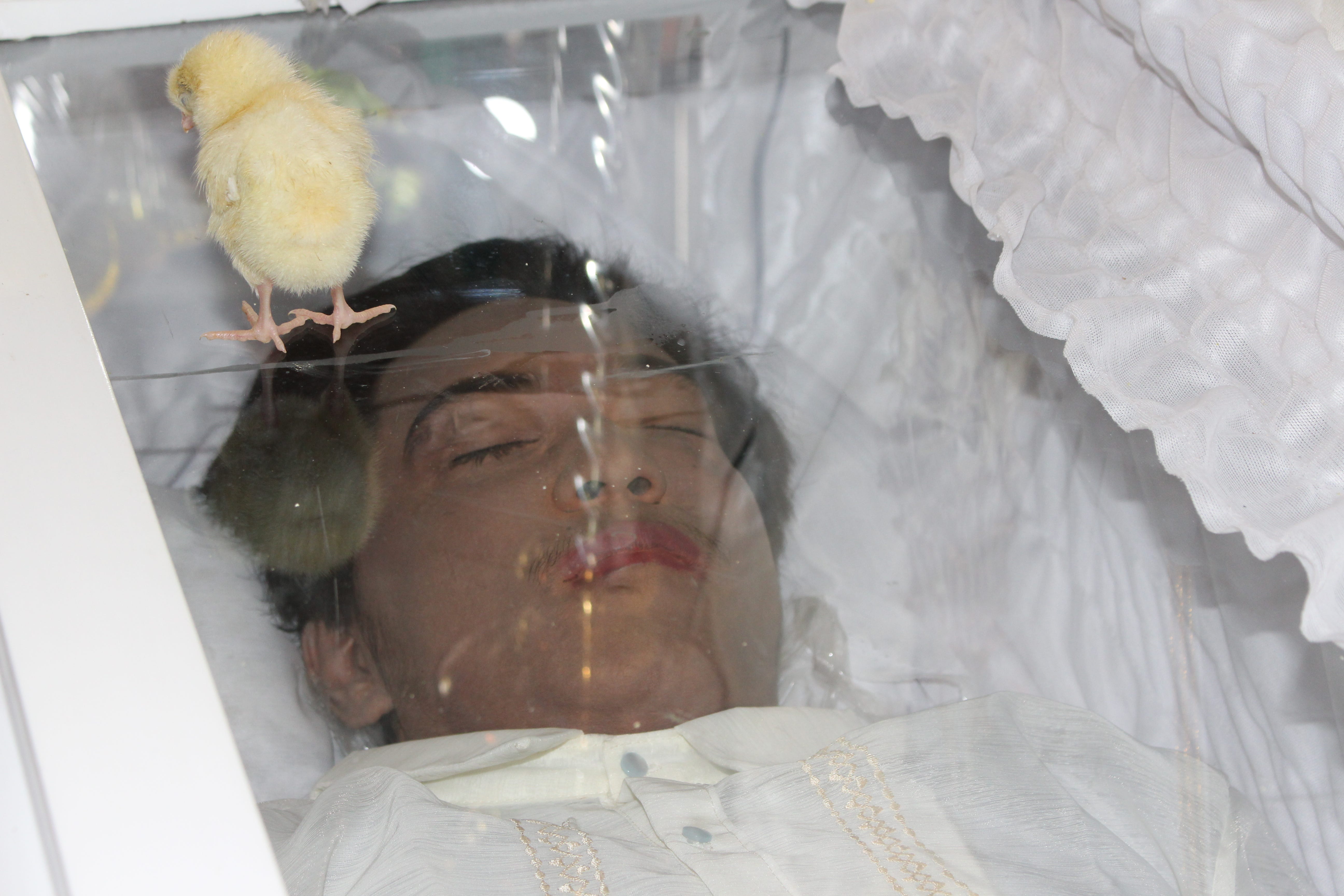
Across the urban jungle, I went to the wake of Carl Arnaiz, a 19 year old student drop out who was killed by police in one of a trio of killings of teenagers that caused a particular criticism of Duterte’s crackdown. In reaction, Duterte called for those police to be punished, provoking some firings and prosecutions that were ongoing. Arnaiz had an open coffin with yellow chicks playing on top and when I stared long through the glass at his face and looked at the photos of him as a happy teenager, tears welled up.
To try and figure out who was behind the bloodshed, the Philippine journalist took us through contacts to meet an alleged assassin. I have interviewed dozens of murderers across Latin America, but this was the first time I met a confessed female “hit woman,” a pretty 25 year old we sat down with in a restaurant. Appearing relaxed, she said she had been doing hits since she was 16, when she was recruited by her husband, which was several years before Duterte took power.
She did her first victim with a knife, walking up behind him and stabbing him in the neck, she said, miming how she skewered him. She had nightmares after that but carried on, graduating to use a pistol. She said the boss who hired them was a corrupt policeman and the victims were street dealers, silenced so they wouldn’t snitch or owed money. The pay was about $380 a hit, she said, which was shared around a team of several involved in the kill, including her husband.
After Duterte took power, the number of hits went up drastically, from or one two per month to seven or eight. But she wasn’t sure if this was part of the war on drugs or her bosses were killing their contacts so they wouldn’t inform on them.
Recently her husband was himself murdered and her boss threatened to kill her and her children, so she went on the run. She was looking for a new husband, she said, and hoped to find one that was not too violent. “Maybe I would be violent to him,” she said.
II
Critics of Duterte were trying to gather evidence to link the murders on the streets to the president. A big blow came with the public testimonies of two men, Edgar Matobato and Arthur Lascanas, who claimed to be former members of the Davao Death Squad and said that Duterte personally ordered hits. Matobato said that they fed a victim to a crocodile and that he saw Duterte himself shoot someone with an Uzi. Duterte denied knowing them.
These whistle blowers were sheltered by Roman Catholic priests, who were among the most vocal opponents of the drug war. Among them was Father Amado Picardal who met me by a beautiful colonial cathedral in Manila. Once tortured under the dictator Marcos, Picardal served in Davao where he said he led a group that documented 1,424 alleged killings by the Davao Death Squad between 1998 and 2015. He claimed that when Duterte became president, members of the killing structure were positioned around the Philippines to commit the murders nationwide.
“He is going to surpass Marcos. The way he acts. The way he behaves. He’s more brutal than Marcos,” he said. “When I saw Duterte coming in...I already warned my flock. This is what is going to happen, that there’s darkness upon us.”
He had heard the president talk about my book and remarked that I looked a bit like Duterte, which made me chuckle awkwardly. Later, I looked in the mirror and couldn’t see the resemblance, although I guess skin color aside we both have big noses. Fearing himself being killed by motorcycle assassins, Picardal later went into hiding.
I met another critic of Duterte, the Senator Risa Hontiveros, who was reflective about the Punisher’s popularity. She told me that he had risen to power amid disillusionment with the establishment and politicians like her needed to change.
“We have to make a critical assessment, like a self-criticism,” she said. “We have to try and keep on creating a new form of democracy where wealth is more equitably distributed, where really each citizen, regardless of class origin has his or her say in the affairs of society.”
A fiercer critic was Senator Antonio Trillanes, a former naval officer, who met me in his office. Back in 2003, he led a mutiny against what he said were fake bombings by the government, which landed him in prison. He won a senate seat while behind bars, and carried on when released on an amnesty, pursuing what he said was a centrist agenda.
He said the first time he had a long conversation with Duterte, he was worried the president was seriously disturbed. “Since he knows that I came from the military, he wanted to impress me that he is a guy who loves guns and was not afraid to kill people. He talked about summary style executions, people kneeling down while he was pulling the trigger. He was graphically describing a murder scene wherein brains were splattered all over the place. He was talking about it casually. He was actually bragging about it.…I believe he was mixing fantasy and reality. He was trying to exaggerate certain portions of his stories, but definitely I’m so sure that he did kill people. You can see it in his eyes and the way he said it that he loved it.”
Trillanes echoed claims the Davao Death Squad model was being used across the Philippines, which he put in filings to the International Criminal Court, or ICC. But he went further, saying Dutere was also corrupt. He published details of bank accounts he claimed belonged to the president, and summoned his son Paolo Duterte into Senate hearings, accusing him of working with traffickers.
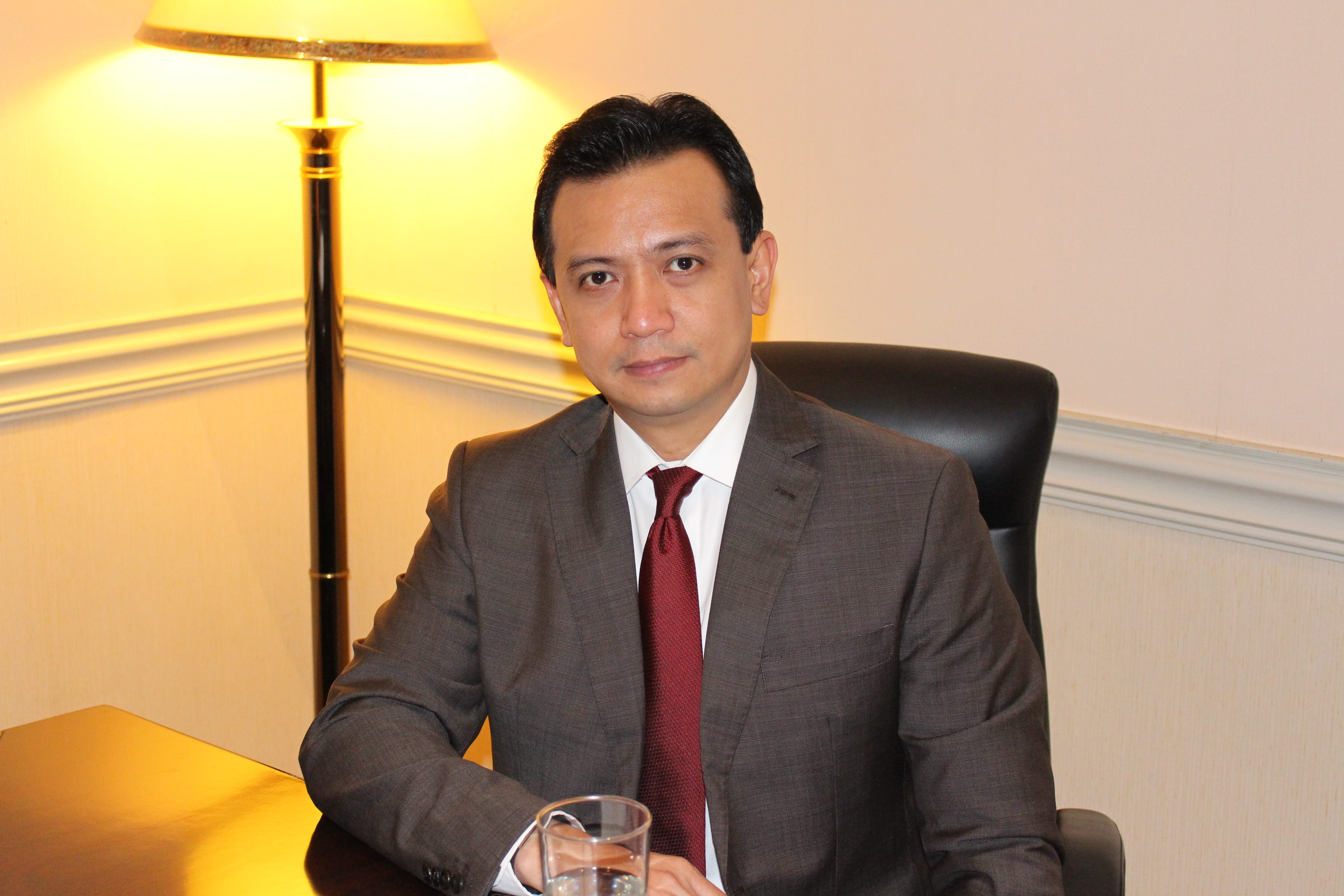
During a hearing I attended, Trillanes claimed that the younger Duterte had a tattoo from a Chinese triad on his back and asked him to show it. The younger Duterte refused and his aide accused Trillanes of being gay.
Trillanes claimed that he had intelligence of orders to kill him so he moved with a group of ex-military bodyguards. But he said he was not scared and did not regret taking a stand.
“I was a former soldier and I stood up against a president once also. For me, this is just another mission. It may be a bit more difficult than the last one. But it’s a mission nonetheless.”
Shortly after leaving Trillanes’ office, my phone rang. My meeting with Duterte had to be rescheduled to the following week. No reason was given. Damn, I thought. They followed me to Trillanes. They think I’m plotting with the opposition.
III
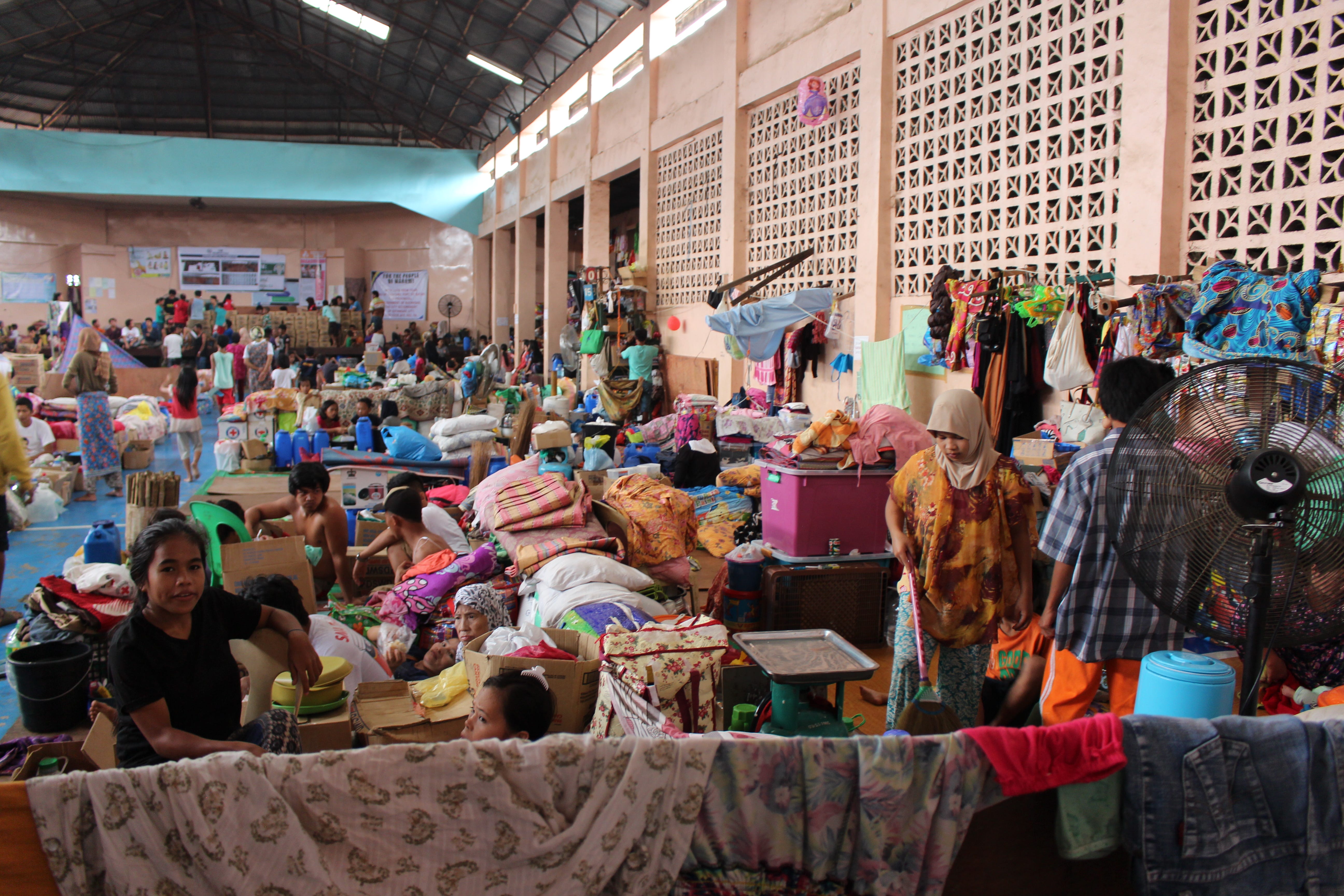
I decided this was the time to visit Marawi, where militants swearing loyalty to the Islamic State had taken over the city and murdered Christians. The Philippine army was forcing the insurgents back block by block backed by air power. By the battle’s end the following month, more than a thousand people were killed (mostly insurgents), and a million residents displaced.
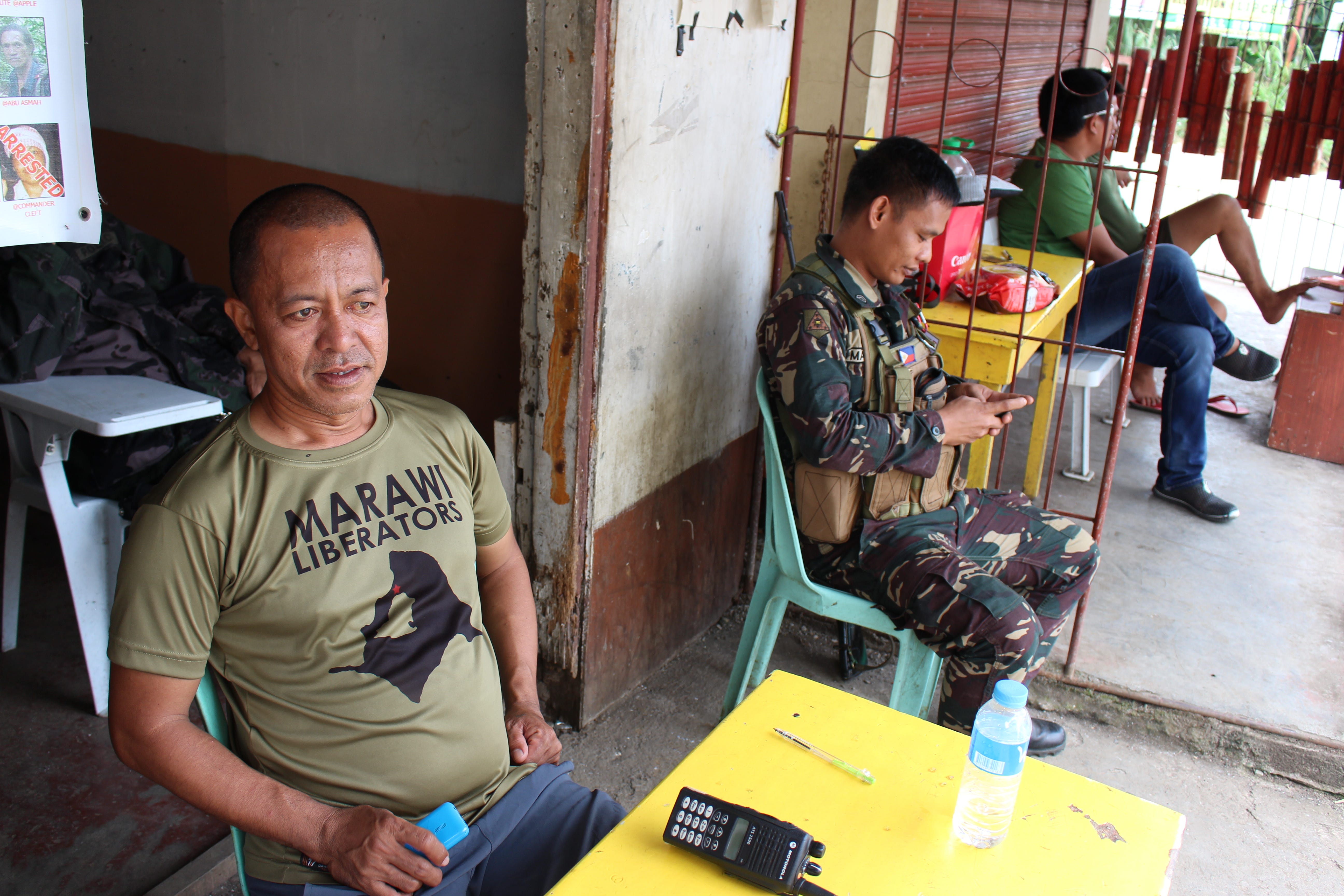
With the journalist’s help, we negotiated our way through checkpoints and the sounds intensified - bullets ricocheting, bombs exploding. Close to the main battle area, I interviewed the commanding general. After our conversation, he pulled out a copy of my book and asked me to sign it.
While we were in Marawi, it emerged Duterte was going to visit troops who had been injured in the battle. I was relieved: of course the rescheduling wasn’t in response to my meeting with Trillanes. The commander-in-chief needed to lead his armed forces.
Traveling to the base, two and a half hour’s drive from the battle area, I slipped into the seething crowd of reporters. As proceedings began, the journalist said it would be proper for me to say hello to Duterte. But when he looked in my direction and it seemed we locked eyes, I moved away and hid in the crowd.
From the back of the room, I witnessed Duterte work his magic on the injured troops. He delivered a ramshackle speech, and it didn’t matter: they were enraptured. I was reminded of other populist figures I’d witnessed shine brightest when talking in public: Hugo Chávez, and, of course, Donald Trump.
When I returned to Manila, I hit the streets and gathered more reporting, but mostly, I waited. The interview was touch-and-go until the day of, and then it wasn’t. When I finally made it back to the palace, I was more relaxed than before. Once again, curiously, I ran into the Chinese ambassador, and I met the new Philippine ambassador going to the United States and signed a book for him. But the staff were not taking selfies with me this time and the event was not publicized in the media.
Duterte treated me like an old friend, and even referred to me as such. “Believe me, I’m telling you,” he said, “as a friend and as a writer.” When I said I had been in Marawi, he shot out, “I won’t let them win.” He said the Islamic militants were involved in meth trafficking so it linked to his war on drugs.
Following on from the chat with Trillanes, I quizzed him harder about whether he had really killed anyone. He related a story about when he was mayor in 1988 and participated in a shoot-out with kidnappers.
“We blocked the street and ordered them to stop. But when I saw the carbine, I got inside the car and got my M16. And there was a shootout,” he said. “I fired, yeah. I fired. Who was hit by me or who was hit by the others? They’re all dead.”
But then he returned to the argument his talk of murder was just words. “Look, when I say ‘I kill you,’ it’s hyperbole. I cannot kill you! It would be impossible for me to go around and kill you all,” he said. “That has been the basic quarrel with the human rights and me…What is wrong in saying, ‘I will kill you if you destroy my country?’ Every leader of this planet in the past used that word.”
I asked him about the accusations against his son, and he denied them but said if there were evidence he would punish him. “Shoot them dead so that they can prove to the world that I am really serious in going after drugs,” he said.
Talking about his son having a tattoo, I mentioned I also had one, and rolled up my sleeve to show a fading cyber punk design from my twenties. He showed me his own tattoo of a rose, and some letters inked on his hand of MG, short for Magic Group, a fraternal organization in Davao. It was a bizarre moment, sitting in a palace comparing tattoos with a president.
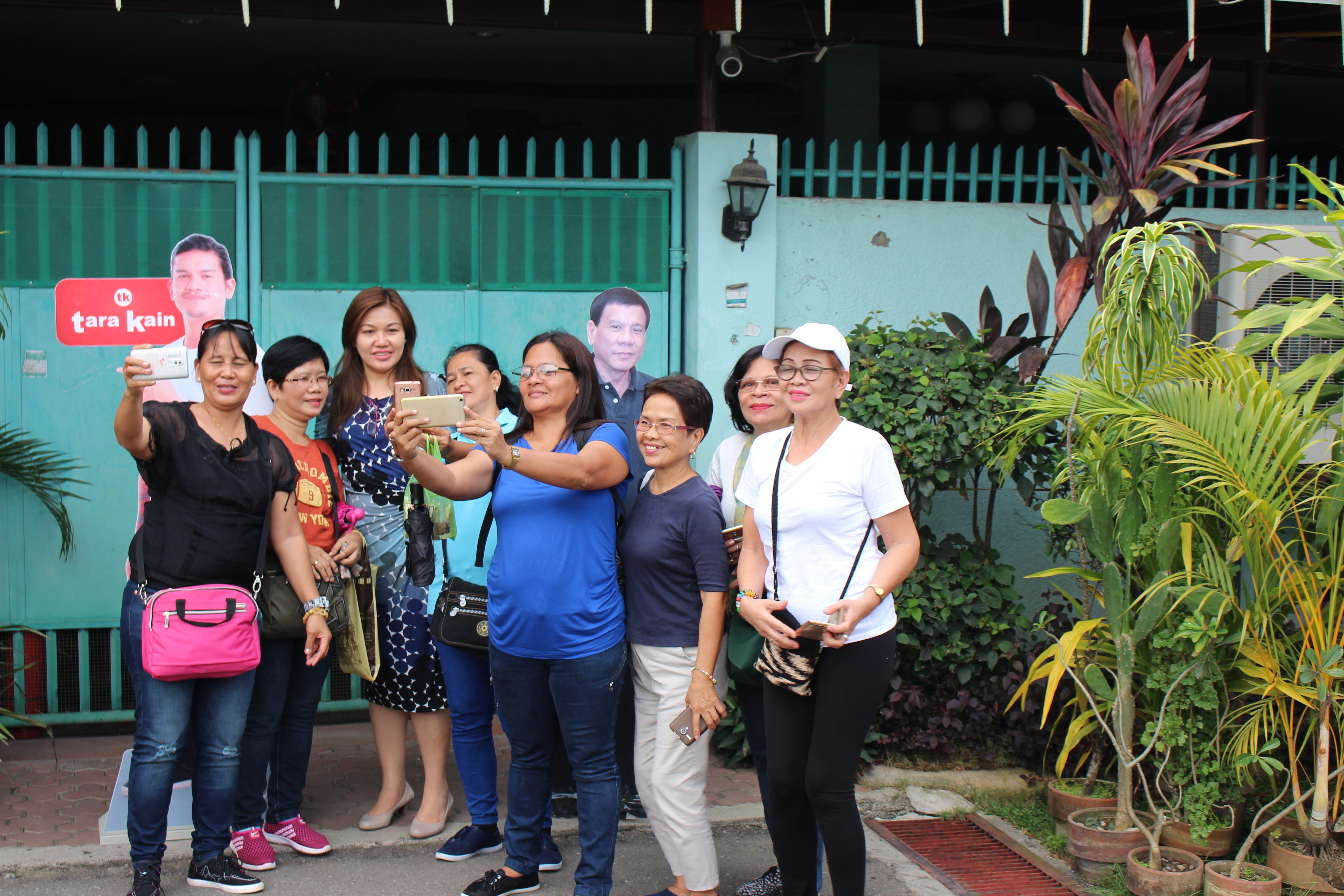
I spent my last days in the Philippines in Davao. At the house of Duterte, crowds waited outside and vendors sold stickers with slogans such as “Duterte warriors,” “I support martial law,” and pictures of clenched fists and skulls. A cardboard cutout of Duterte stood outside the home that people would pose to take photos with. Talking to those on the street, his popularity in Davao seemed spectacular.
Yet my heart felt heavy when I left the Philippines, the images flashing in my mind, of the body of the teenager in the open coffin, of Trillanes describing death squads, of Duterte’s eerily familiar face. I was relieved to get back to my home in Mexico City. The very next day, it was shaken by the worst earthquake in 32 years.
IV
By the time Duterte left office in 2022, critics said his war on drugs had killed tens of thousands, with some claiming as many as 30,000 victims. However, his government just said the police had killed more than 6,000 criminals who had resisted arrest.
During his term, police detained various critics including Trillanes, on charges related to a mutiny of the past, and Maria Ressa, a famous journalist and founder of Rappler, on charges from tax evasion to libel. The cases against Ressa drew worldwide condemnation over press freedom, and Ressa won the Nobel Peace Prize in 2021.
Duterte finished his mandate with an approval rating over 70 percent, according to some polls. Ferdinand “Bongbong” Marcos, the son of the former dictator won the election and replaced him as president, while his daughter Sara Duterte became the vice president.
As I had thought, politicians in Latin America indeed gained power on hard line anti-crime platforms, albeit not as extreme as Duterte but echoing similarities. Former military officer Jair Bolsonaro ruled Brazil from 2019 to 2023 saying he wanted criminals to “die in the streets like cockroaches,” and railing against a corrupt establishment. In September, he was convicted of plotting a coup to stop his successor Luiz Inácio Lula da Silva take office
In El Salvador, Nayib Bukele has led a campaign of mass incarceration of gang members (and alleged gang members). He has turned Salvador into the country with the highest prison population per capita in the world and various journalists have fled for fear of imprisonment. At the same time, he has drastically reduced the murder rate and remains wildly popular and is influential on the global stage.
While Bukele’s results are undeniable, the long term results of Duterte’s war on drugs are more debatable. With the ruthless crackdown, the number of drug addicts in the Philippines tumbled from 4 million in 2016 to 1.67 million by 2019, according to the Duterte administration (although critics question these figures). But while the offensive caused a meth shortage in 2016, this seemed to ease up later in Duterte’s term. The new Secretary of Interior and Local Government Jonvic Remulla claims that corrupt cops resold seized shabu back onto the streets. “I estimate that, for every one ton that would be confiscated, 900 kilograms would go back to the market,” he said.
This February, the ICC, seated in The Hague, indicted Duterte for crimes against humanity in his war on drugs. According to reports of the indictment, Duterte is charged specifically with three separate sets of killings between 2011 and 2019, when he was both mayor and president.
The government of Bongbong Marcos acted on Duterte’s arrest warrant amid a feud between the Marcos and Duterte families, in which Duterte called Marcos a “weak leader” and a “drug addict.” Police arrested Duterte on March 11 and bundled him on a plane to the Netherlands. “Interpol asked for help and we obliged,” President Marcos said in a news conference. “This is what the international community expects of us.”
Sara Duterte, his daughter and vice president, said it was a political persecution. In October, the ICC refused bail to Duterte, now 80. His trial is expected early next year.
I got a deal to publish this story in a major magazine; the editor did some good work on the draft and we were almost ready to print in 2019. In that time, I was also working on a book on gun trafficking and I appeared on the Joe Rogan Experience. But then the editor sent me a heavily rewritten draft and I hated it. Worse still, he sent me notes from an editorial meeting and there was a line that this was a story about journalistic complicity. I feared I was going to be thrown under the bus and just had a bad feeling and walked away, despite the top editors calling to convince me to publish. I left a big check on the table and took a loss on what I spent on the reporting, although I would have got royalties on the books sold.
I still have mixed feelings about the situation and am uncomfortable telling elements of this story of meeting Duterte, but I feel I need to get it out there. And now I have this newsletter I can tell it how I want to tell it.
Democracy in much of Latin America as in the Philippines has been dominated by wealthy cliques, while the poor majority struggle. Many people are genuinely concerned about the issues of crime, drugs and violence and we have to look at why so many governments have been unable to contain them. With continued failure, we could see the rise of leaders who are more violent even than The Punisher.
I used to tell myself that as an author, the first person I have to serve is the reader – you. More than my sources. More than my damn editors. But then I had a reader who was accused of crimes against humanity. And I had to rethink that one.
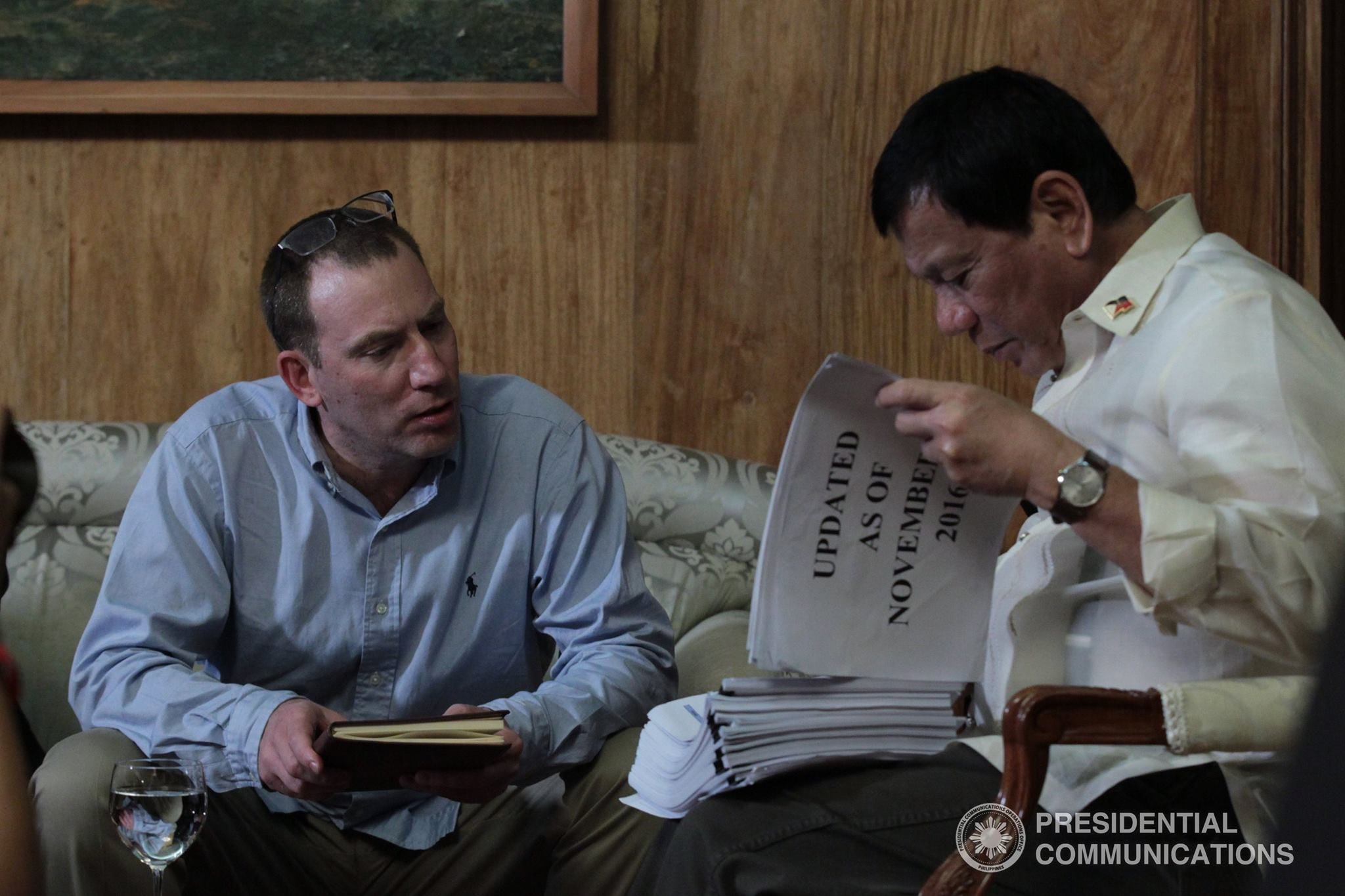
Top photo by KING RODRIGUEZ from the Presidential Communications Office of the Office of the President of the Philippines, 2016. Photos 2,3,4,5,6, by Ioan Grillo
Text copyright Ioan Grillo and CrashOut Media 2025

I admire your willingness to walk away from cash on the table, especially after what you went through to get this story (which - as always -was fascinating & insightful). Cuídese.
Fantastic piece and Duterte is truly the Punisher and the Pit Bull of politics. Duterte's mindset and psychology is so reminiscent of some of the most tenacious and slugging champions of boxing who took no prisoners in the ring and were going to destroy them every way possible. A Jake LaMotta in savagery and a Lupe Pintor in strength and tenacity.
Certainly Duterte had his training directed by his mother who was a strong community activist and played a huge part in the deposing of Ferdinand Marcos. His strength was built up by his actions as mayor of Davao City, for twenty two years, by destroying the lawlessness of Davao City and making it one of the safest cities in Southwest Asia. Even after being arrested by ICC, he was still elected mayor of Davao City.
The ICC has been so politically corrupt and biased since the Yugoslavian Civil War and the war in Kosovo. With the conflict between Marcos Jr and Duterte's daughter, the ICC saw it's chance to try and destroy Duterte with the help of Marcos Jr. despite his claims of non-involvement. The hidden aspect behind the ICC charges is the operation against ISIS in Marawi. Duterte's actions in Marawi were condemned especially by the organizations and individuals that are closely aligned with the ICC. Atty. Arnedo S. Valera is the executive director of the Global Migrant Heritage Foundation and managing attorney at Valera & Associates, a US immigration and anti-discrimination law firm for over 32 years and has condemned the charges against Duterte as legally flawed. (https://usa.inquirer.net/168300/why-the-icc-case-against-duterte-is-legally-flawed). Marawi was Duterte's Fallujah but lacking the US indecisiveness and confusing rules of engagement in Fallujah. Duterte's ruthlessness and the determination to destroy ISIS really repulsed and frightened many leaders around the world.
Duterte, today, would still be leader of the Philippines if he had taken over the legislative and judicial branches of the Philippines like Bukele did in El Salvador. It took Duterte in Davao City years to achieve his objectives of destroying the drug and criminal activity in the city. Democracy reaches the edge of the cliff when confronted with the onslaught of crime, unrelenting violence against the community and the corruption of so-called Democratic leaders.