

Para leer en español click aquí.
I first met Simeon Tegel when I arrived in Mexico City in 2000. He had done his time in London’s hard-bitten newspaper scene in the nineties and was freelancing here and gave me good advice and contacts to make it happen. He later moved to Peru and has been doing stellar work the last two decades from below the equator, especially on the under-covered issue of the environment. It’s great to have him contribute this piece to CrashOut, reporting from Ucayali, Peru about cocaine traffickers tearing up the jungle. This fits into a CrashOut series on gangsters and the environment, following this piece here on cartels and illegal loggers in Chihuahua.
By Simeon Tegel
It takes two hours of bushwacking in stifling heat through overgrown jungle paths and thigh-deep rivers to reach the edge of Peru’s Cacataibo Indigenous Reserve. Located just where the Andean foothills rise dramatically out of the endless Amazonian rainforests, the reserve’s 370,000 acres of lush, precipitous valleys are home to some of the last “uncontacted” hunter-gatherers on planet earth.
Numbering just a few dozen families, they live the same semi-nomadic lifestyle practiced by thousands of generations of their ancestors, completely cut off from the outside world. They are oblivious to all aspects of modern life, starting with metallurgy never mind mobile phones, cars or the half-a-millennium of world history since Europeans first began colonizing the Americas.
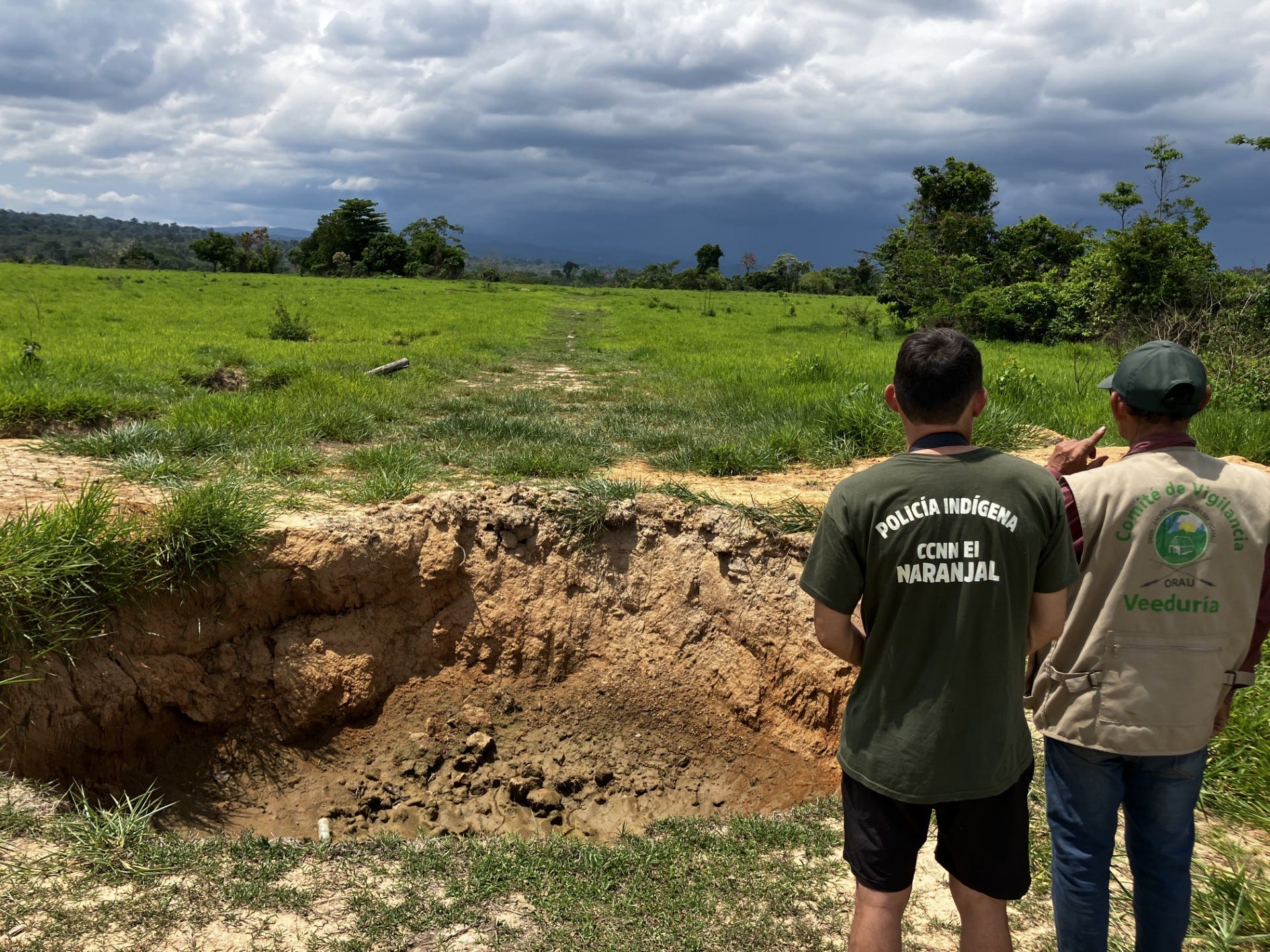
As we approach the reserve, one of the members of the self-styled “Indigenous Guard” who I am accompanying, talks about how uniquely vulnerable the residents are to infection and exploitation by outsiders, who are strictly prohibited from entering.
“Coca is the last thing that should be in there,” says the Guard, referring to the Andean bush whose leaves are the key ingredient in cocaine. Traditionally chewed as a mild stimulant up in the mountains, the crop does not historically belong down here, in the festering heat of the Amazon. “Our brothers and sisters are terrified by the narcos. They are defenseless. The authorities do nothing so it is down to us to protect them.”
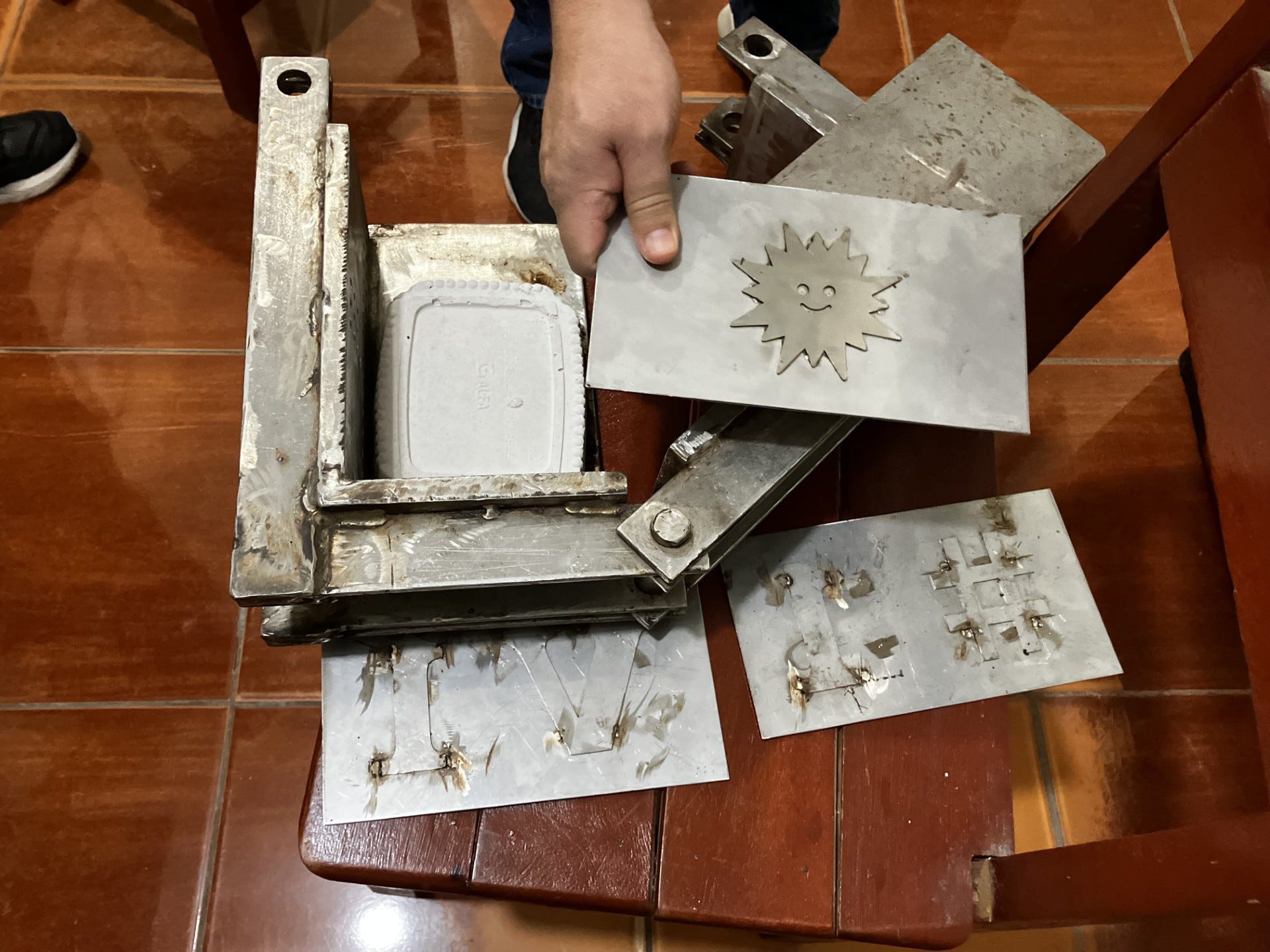
A cocaine press
The Guard knows all too well what these illicit crops mean – deforestation and death. In recent years, dozens of indigenous leaders, including six Cacataibo, have been murdered across the Peruvian Amazon for resisting the drug traffickers and illegal loggers who often work hand in hand with them.
Armed with spears, bows and arrows, machetes and the occasional rusty shotgun, the Guard regularly patrols the reserve’s perimeter on the look out for coca fields as well as processing labs – which leak toxic chemicals into the water table – and clandestine airstrips.
The Guard’s leader, Segundo Pino, shows me a recent death threat on his phone, warning him to stop reporting the narcos to the authorities. In badly written, profane Spanish, it warns that “so-called” indigenous leaders like Segundo will “fall one by one” and that there will be “bloodshed”.
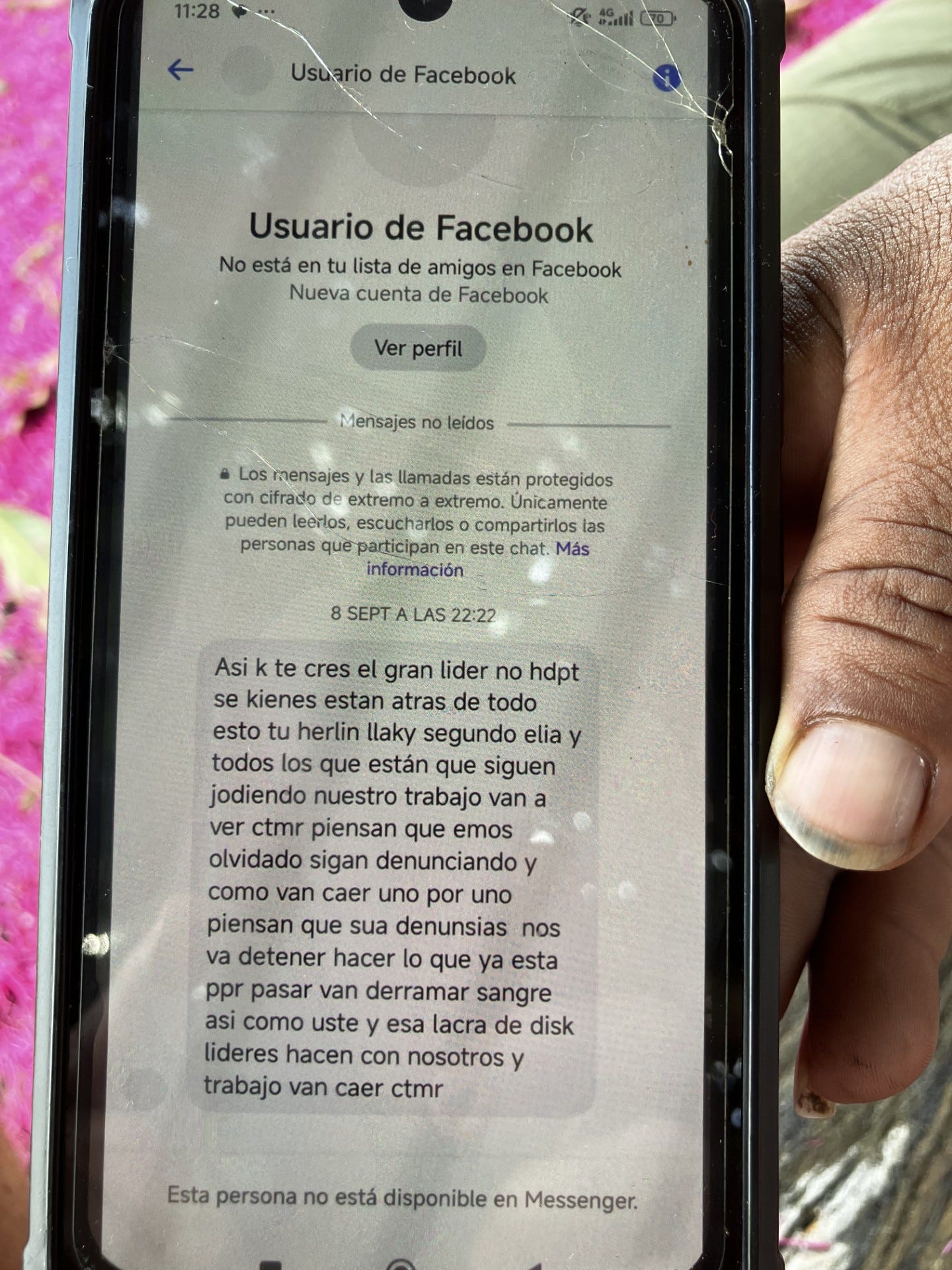
“Of course, I am a bit scared. I don’t have security. I don’t have a bodyguard. But it makes me reflect that our work is achieving results. This threat shows…
Sorry folks, you need to subscribe to read the rest of this story. But it’s only the price of a cuppa coffee and you get the complete archive including exclusive interviews with top players and maps of cartel territory. And now is a great time to subscribe as we will be following these issues with detailed reports you can trust as big things break in the coming months.