


UPDATE - On Feb. 11, 2026, the U.S. Federal Aviation Administration announced it had closed airspace in El Paso, Texas. U.S. officials were reported saying this was because of the threat of cartel drones. Other officials were cited saying it was because of U.S. military drones being used in anti-cartel operations being in the flight paths of planes. A final explanation offered was that the U.S. military was trying out laser technology that could be used to shoot drones down and hit down some balloons, and its operations triggered the FAA to do a shut down.
The drones used by cartels on the border are largely different from those shown in this story in Guerrero state, as they are more for surveillance or smuggling than dropping makeshift bombs. But with the issue in the headlines I am re-publishing this report with no pay wall.
Para leer en español click aqui.
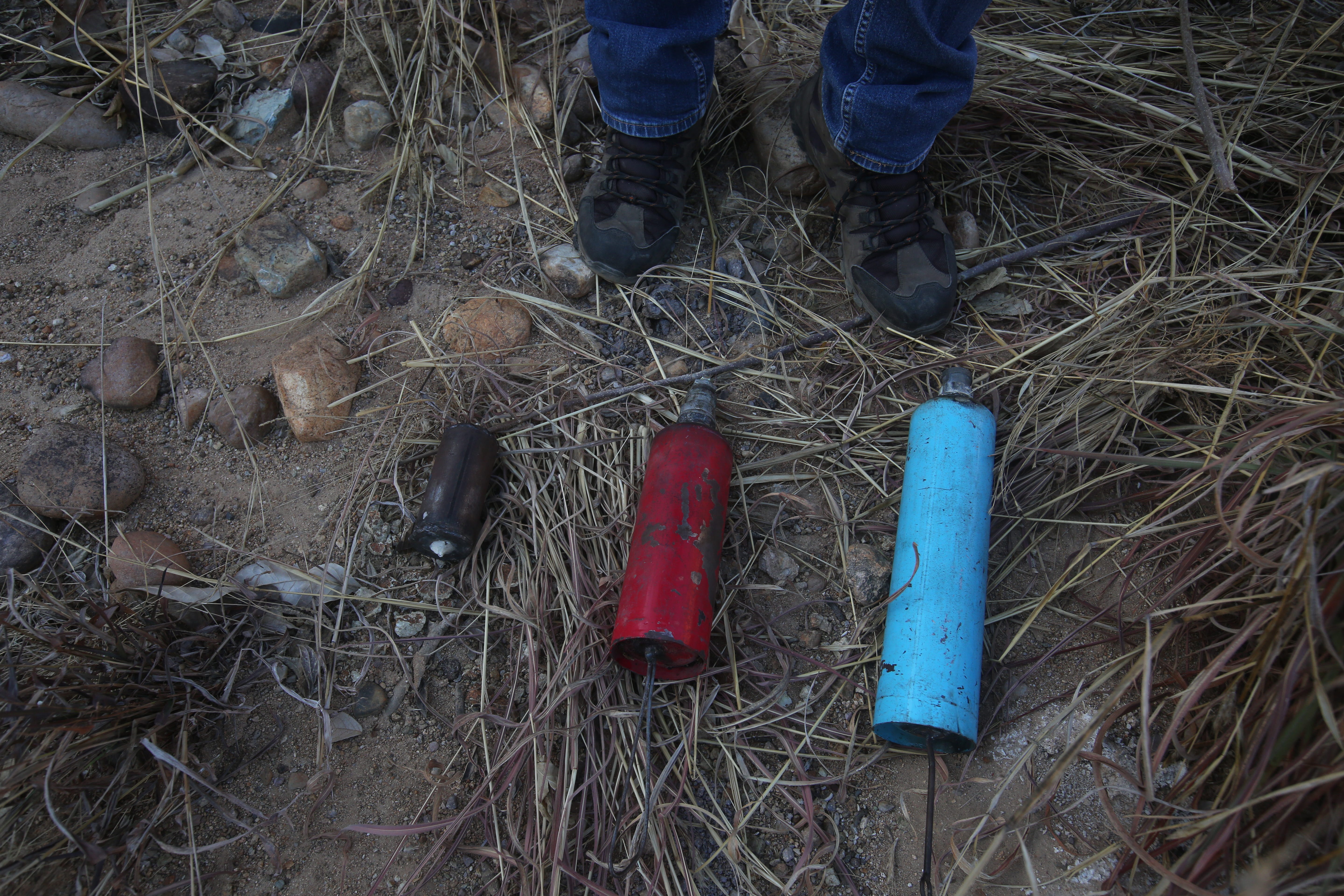
The drones fly high, cruising up to 1,000 meters which makes them hard to spot, the villagers say. They use their release mechanism to unleash makeshift bombs of explosives packed into metal casings such as old fire extinguishers that suddenly come hurtling down. The devices set homes ablaze, blow holes in walls, and release piercing hot shrapnel into people’s flesh.
Mexico’s crime cartels have stepped up their use of weaponized drones, especially in the states of Guerrero and Michoacán, adding yet another bloody element to the hybrid conflict that plagues swathes of the country. They are smaller and less lethal than drones used in Ukraine or Syria and have caused few casualties so far when compared to the tens of thousands killed here by bullets. But they sow terror as attacks come unannounced at anytime and villagers flee their homes in fear.
“Our families are scared. We can’t live like this,” says Guillermo Villa, a 56 year old farmer who who we find arriving in the town of Santa Rosa with a mattress and heap of possessions in a pick up truck. He came down from the highland village of Las Mesas after a new wave of drone attacks in the area and plans to relocate his whole family.
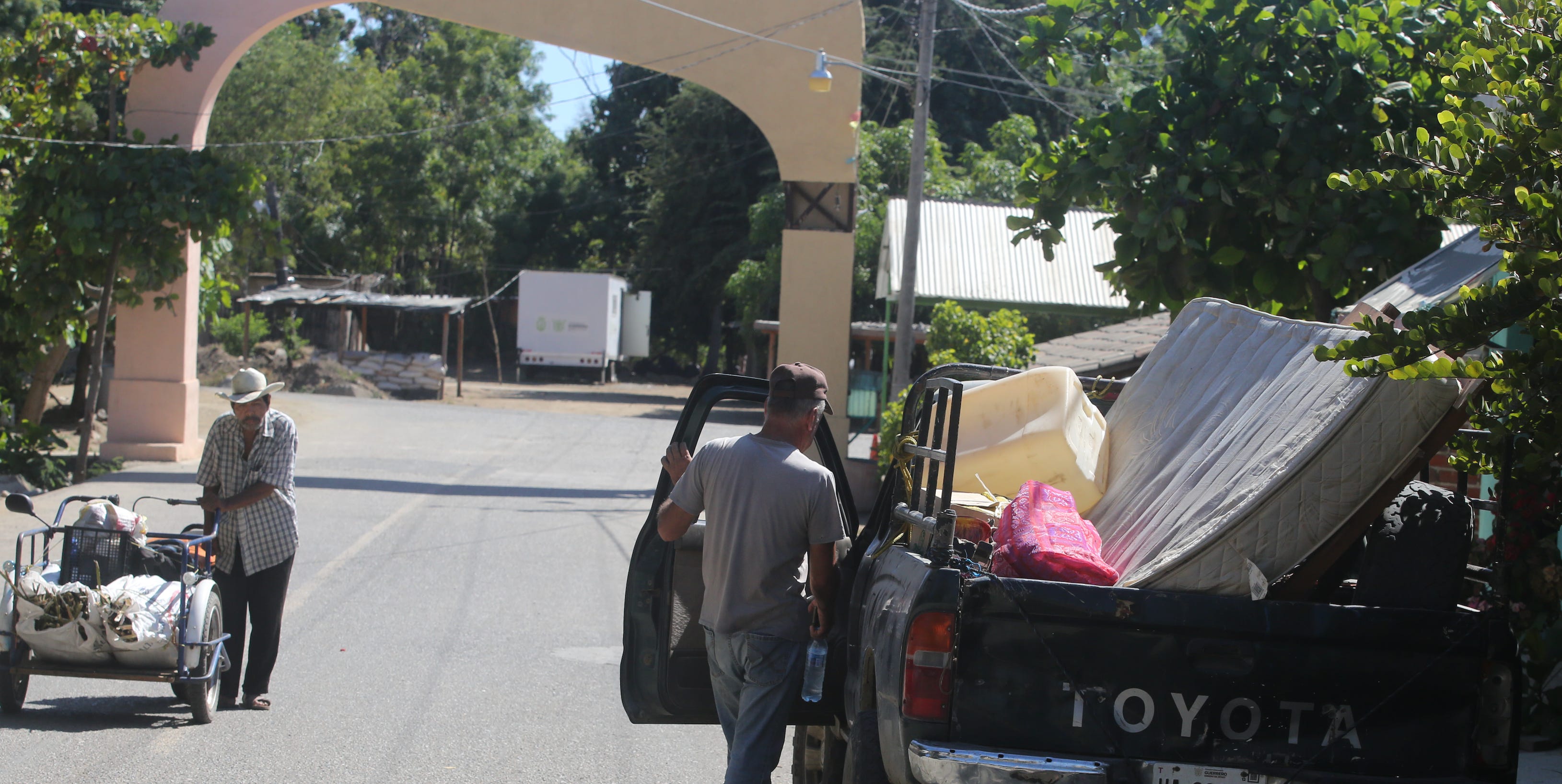
Making people run from their homes is forced displacement, which Villa claims is an objective of the attacks. In Guerrero, a cartel called La Familia Michoacana is alleged to be behind the drones as it tries to expand its territory from the mountains to the ocean. A decade ago, the gangsters here fought over opium fields but now they want turf to shakedown anything that can. “They want to take over the region and everything that is here: the cattle ranching, the wood trade, the mangos, the coconuts, the beaches,” Villa says.
Cartels also use drones to directly target the homes of gangster bosses, making them look vulnerable in their own terrain. The bombs will strike grandiose houses that stand out in the ramshackle Guerrero towns and are alleged to belong to local crime chiefs.
Mexican cartels have had weaponized drones since at least 2017. However, for several years there were just scattered cases of machines that didn’t go off and then “suicide drones” packed with explosives that flew into their targets. In 2021, the Jalisco New Generation Cartel began using more sophisticated devices against rivals and Mexican soldiers in Michoacán. Their enemies responded with their own drones reportedly run by Colombian mercenaries. Last year, La Familia launched its drone campaign in Guerrero and has escalated attacks since.
The drone war in Guerrero has two fronts. The first is in the arid mountains of La Tierra Caliente where La Familia battles a force called Los Tlacos. The second is in the Costa Grande region where green mountains slope down to golden beaches on the Pacific Ocean. Here, La Familia confronts older local crime families that lack a strong paramilitary force. We travel this area and its municipalities of Técpan and Petatlán looking at damaged buildings and talking to witnesses.
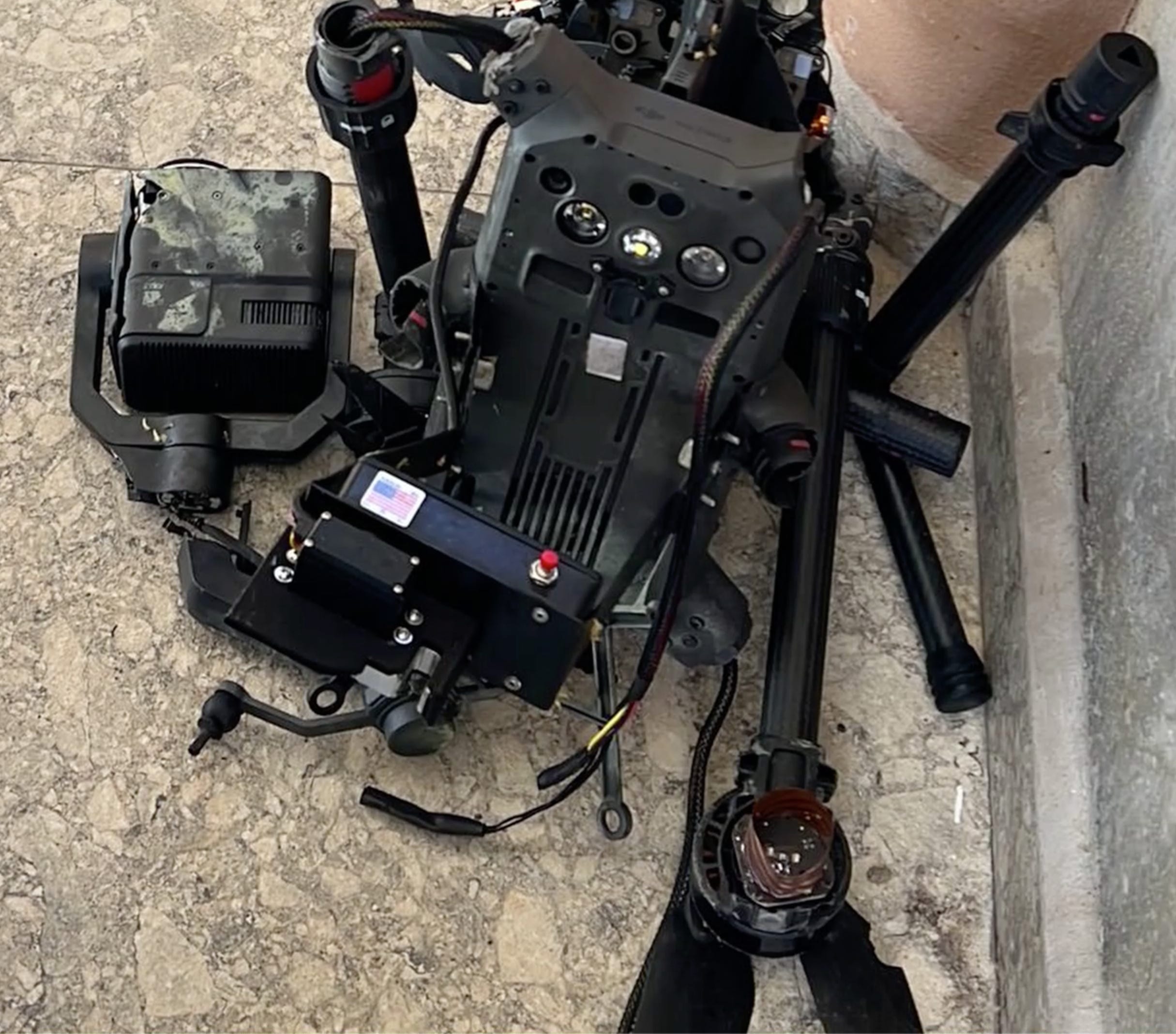
One of the attack drones was recovered by villagers. Various sources say armed locals had shot it down, although local media reported it suffered a mechanical failure. The villagers took out a card which had videos of attacks, one of which is below. They also reconstructed the attack drone.
Armed villagers also captured a gunman from La Familia who got cut off from his squadron and was wandering the mountains for a week starving. While Fernando’s fate was being decided, we interviewed him about his time in the cartel and the use of drones. He paints a picture of a terrifying offensive that may only get worse.
“They have drone pilots, specialists to control them…They have plenty of drones so even if a carrier [a mule] loses some they don’t care,” Fernando said. “They want control, to control the people…This is just beginning.”
War Technology
Cartels used drones for surveillance and drug trafficking from the early 2010s. The first recorded case of a weaponized drone in Mexico was in 2017 when federal police stopped a stolen car in Valtierrilla, Guanajuato, and nabbed a stash of guns along with the flying machine. The explosives were stuffed into the body of the drone, and Mexican media described it as a “papa bomba” or homemade bomb. The following year, a drone with two fragmentation grenades flew into the house of the public security secretary of Baja California but they failed to detonate.
In 2021, the Jalisco Cartel flew a weaponized drone into police officers in the town of Aguililla. Run by El Mencho, the Jalisco mob has been on the cutting edge of paramilitary techniques. It had its own factory to assemble AR-15s, its gunmen shot down an army helicopter and it has poisoned the landscape with improvised landmines. As the Jalisco Cartel continues to wage war, it’s drone division has evolved. In February, Jalisco sicarios hit soldiers using drones, guns and a landmine killing four and injuring nine.
The Small Wars and Insurgencies journal published an analysis of this development last year, entitled “Narco Drones: Tracing the Evolution of Cartel Aerial Tactics in Mexico's Low-Intensity Conflicts.” The writers observe how drones are easy and cheap to bring into battle and have a psychological impact.
“Drones have become an increasingly common weapon in the arsenals of Mexican drug cartels due to their affordability, adaptability, and the cartels’ propensity to embrace new technologies…Armed drones have emerged as a potent psychological warfare weapon, with cartels employing them to instill fear and intimidation in rival cartels, law enforcement, and the general public. The unpredictability of drone attacks compels these groups to maintain constant vigilance and modify their strategies.”
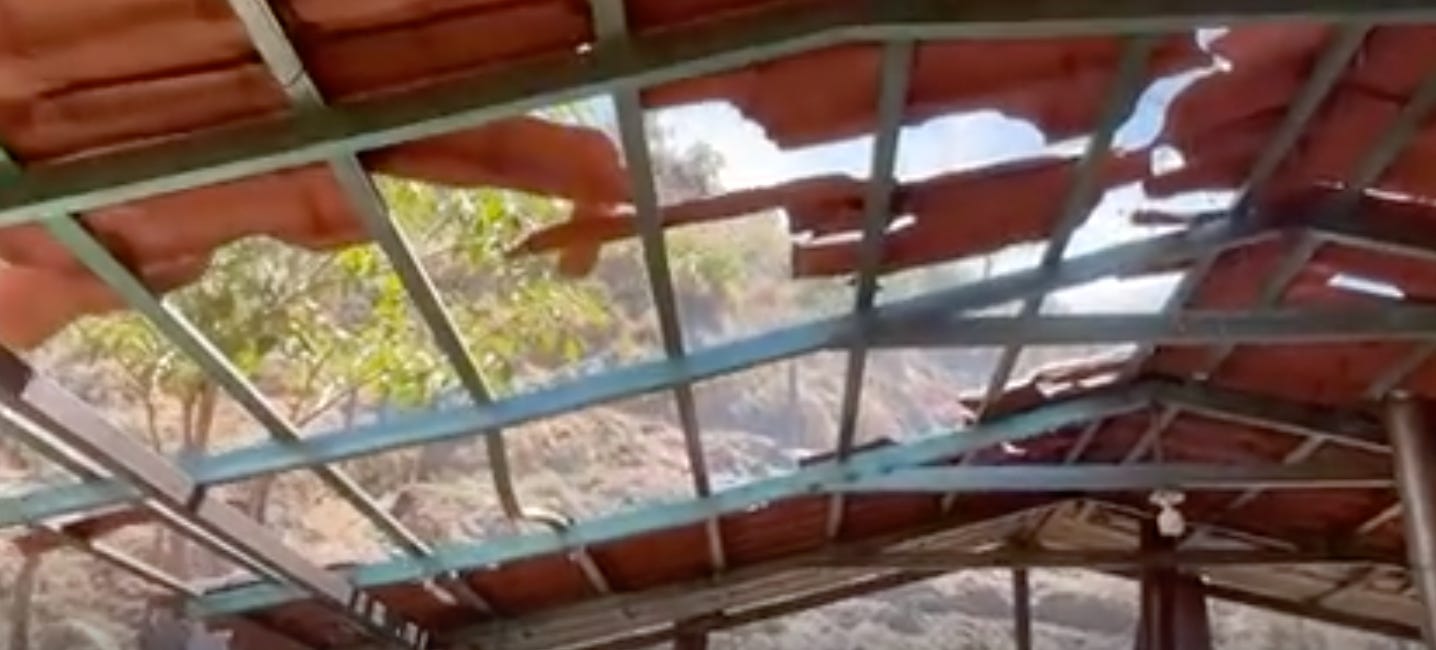
La Familia launched its drone offensive in Guerrero in May last year and since then, there have been dozens of bombings. They hit villages with fragile buildings of wood and sheet metal, tearing down homes and even hitting a school.
The villagers who captured the drone reconstructed it as shown here. It appears to be a high range DJI model, which sells for north of $10,000. Further videos from its card are below.
Lost Soldier
We find Fernando, the captured gunman, being held by armed villagers who have suffered from the drone attacks. He is 22 years old, nervous and frightened but concedes he committed grave crimes working for the cartel.
Hailing from an indigenous Mazahua community in Mexico State, Fernando says he was recruited into La Familia at 19 under coercion, although says he was paid 14,000 pesos ($845 a month). While La Familia was originally founded in Michoacán, it has now built its strongest base in Mexico State putting it dangerously close to the capital.
Fernando describes how he fought for two years in the Guerrero mountains with squads of up to 200 gunmen. It was a life of hardship, sleeping rough and cold, eating little and hauling heavy packs. And it was a life of violence as they confronted rival cartels and security forces and kidnapped people for execution.
He lost his squadron as he was holding up the rear carrying a thousand bullets and following a rookie who was straggling. The rookie in turn ran off and he was lost with no food and water.
“It was more than a week, without eating anything,” he says. When he finally found a farmer he begged for food. “Yes, I cried. I had a hunger that not even a dog has suffered…He treated me well. I thought he would do the worst to me.”
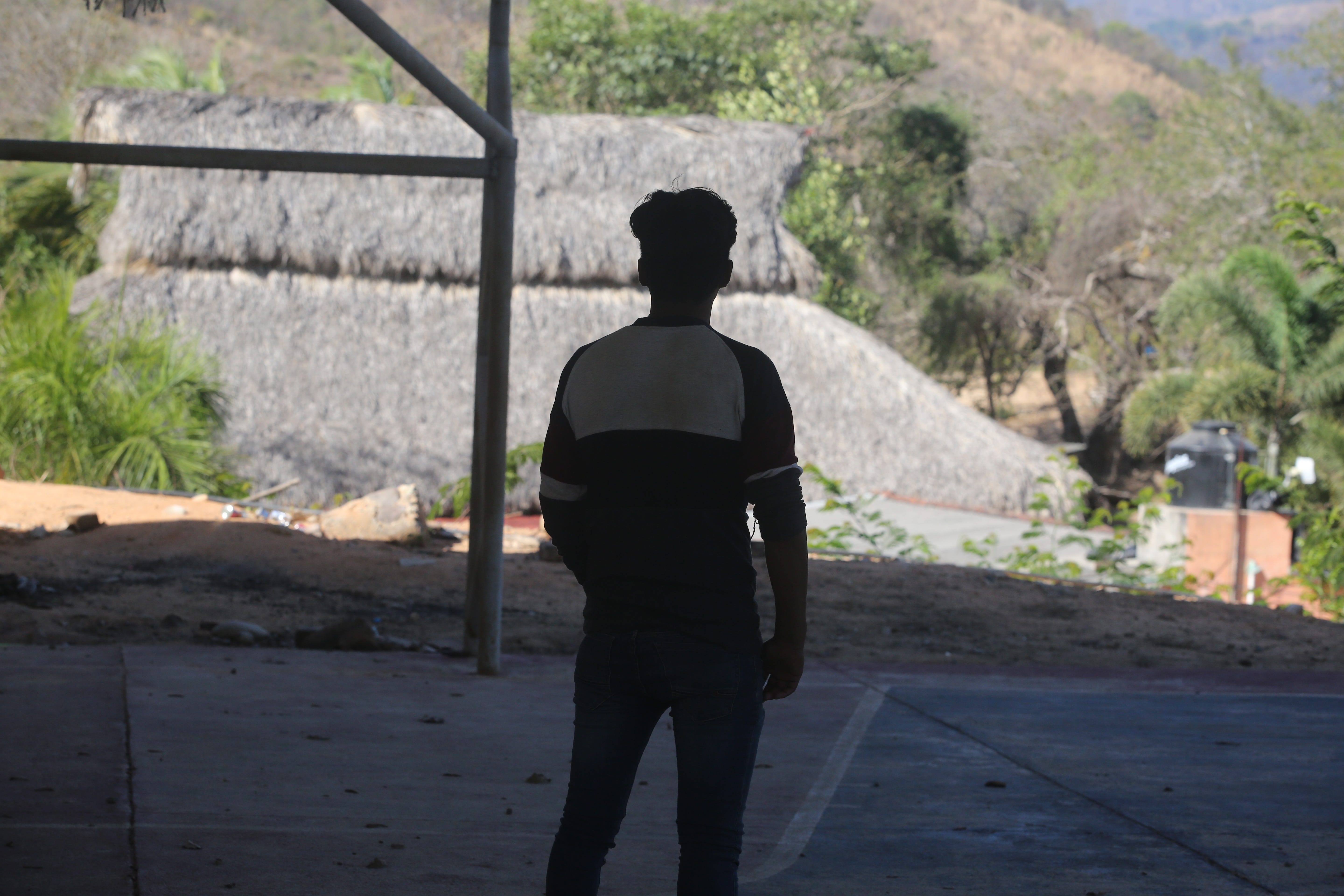
Fernando describes how the drone operators form a new position within cartel ranks known as droneros. There is a lot of skill in managing the flying machines, especially when it means avoiding gunshots and dropping bombs on targets; military and commercial drone pilots undergo extensive training.
However, Fernando says he didn’t like the idea of becoming a drone operator as they are exposed to enemy gunfire. “When you are like this,” he says miming somebody operating a drone console, “a bullet will get you. They have snipers.”
Fernando describes how packing the makeshift bombs is also hazardous as they are filled with toxic material. “They are strong materials that affect health,” he says. “The people that prepare the bombs get sick. And then you have to walk and walk in the mountains and they can’t do it.”
Villagers showed some of the fallen bombs that failed to explode. They are made in metal casings as shown below, often repurposed from other devices.
An Evolving War
It’s hard to define the military impact of the drones as they are often used in combination with other weapons such as rifles and grenades. And there is a failure by government agencies to document the casualties and injures in the mountains, especially when they believe the victims themselves are cartel operatives.
In one case in January, La Familia attacked the village of Buenavista de los Hurtado in Guerrero with drones as well as rifles. A local priest initially claimed there were 30 dead but later conceded this was an exaggeration. A prosecutors report finally said it had knowledge of five dead while locals said there had been at least nine.
Either way, it’s likely that drones have been used as part of attacks that have killed no more than a few dozen in total over the years while Mexico reports over 30,000 murders annually.
Still, the use of drones dropping bombs on villages and making people flee is a haunting case of terror. The villagers call for more military intervention to try and stop the campaign but the government has been hesitant to commit large forces to the remote areas.
A problem is that there is so much violence across Mexico, it can be easy to ignore such problems. But when the government fails to draw lines on these crimes, they can get worse and worse. And after landmines and weaponized drones, who knows what the next weapon will be?
Thanks for supporting true independent journalism
This is one of a series of stories from the Mexican state of Guerrero working with photo journalist Javier Verdin (photos throughout) and reporter Servando Mellin with support from Bobby X Media.
Copyright Ioan Grillo and CrashOutMedia 2024
Photos 2,4,8 and 9 copyright Javier Verdin.

I predict after this Ukraine thing is over, a lot of Ukrainian drone engineers will be looking for work in Mexico.
Congratulations! You found your career path!