

Driving through the mountains of Guerrero, Mexico, you have to navigate the confusing and shifting map of turf controlled by rival groups of gunmen, whether they be cartels, dubious militias or authentic community police. As we roll out of the ramshackle town of Ayutla de los Libres on a bright sunny morning, we go through a first checkpoint manned by a gaggle of scrawny youths with baseball caps and Kalashnikovs; they ask for a donation of spare change to help with “the cause” and let us on our way.
We trundle along a dirt road with cavernous potholes towards the village of El Paraíso and a larger self-defense force, with a meeting set up by photographer Javier Verdin, who has been documenting these mountains for decades. When we get to the village, it’s deftly quiet; we ask a woman in traditional indigenous dress carrying a baby where the community police base is and she looks at us like we are aliens and shrugs her shoulders.
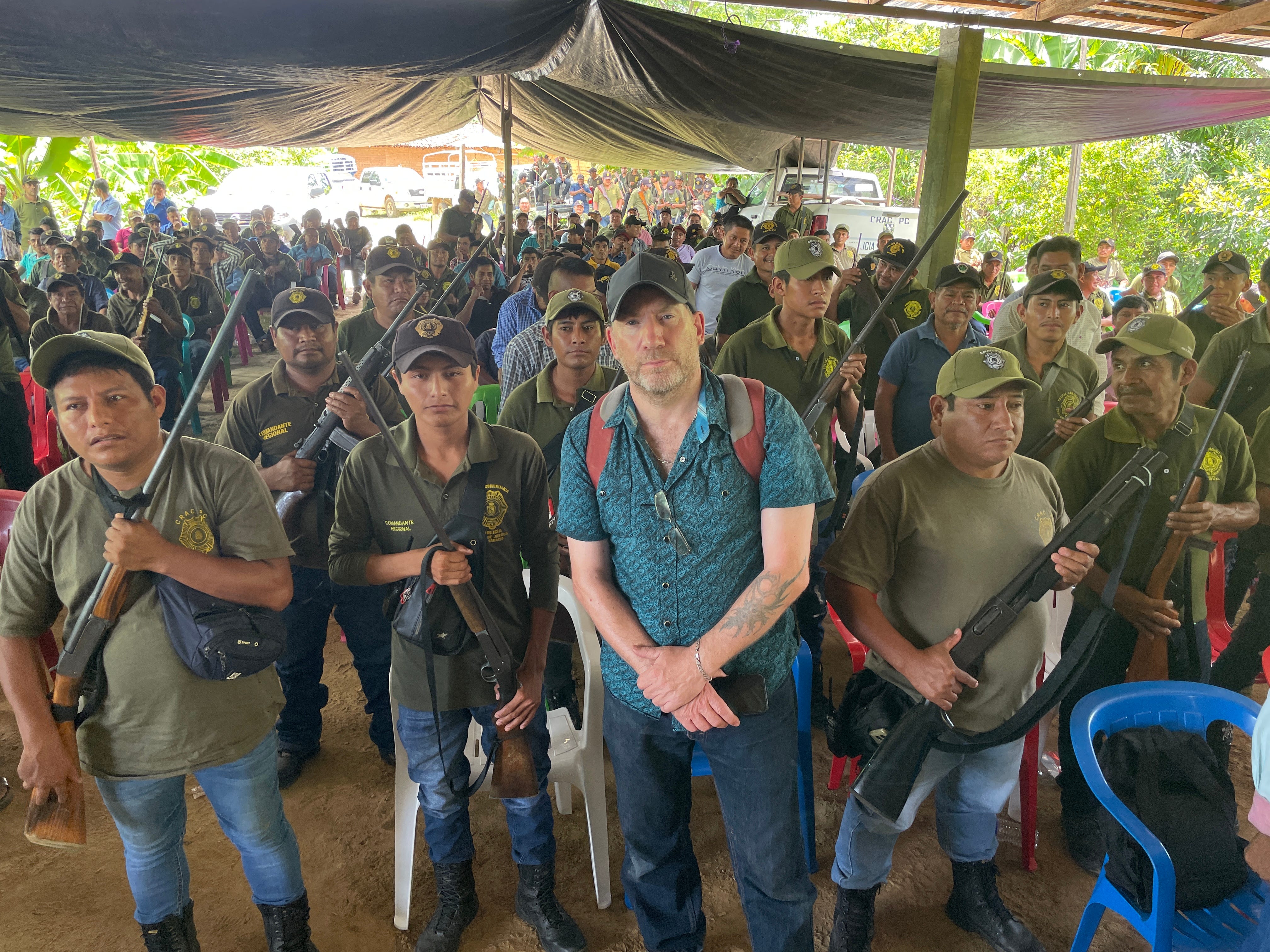
We finally have to leave our vehicle in a resident’s yard and hike up a track into the hills as mist rises from thick vegetation. Short of breath, we turn a corner and walk into the stunning sight of about 300 men (and a handful of women) in blue jeans, baseball caps and light green t-shirts, wielding rifles.
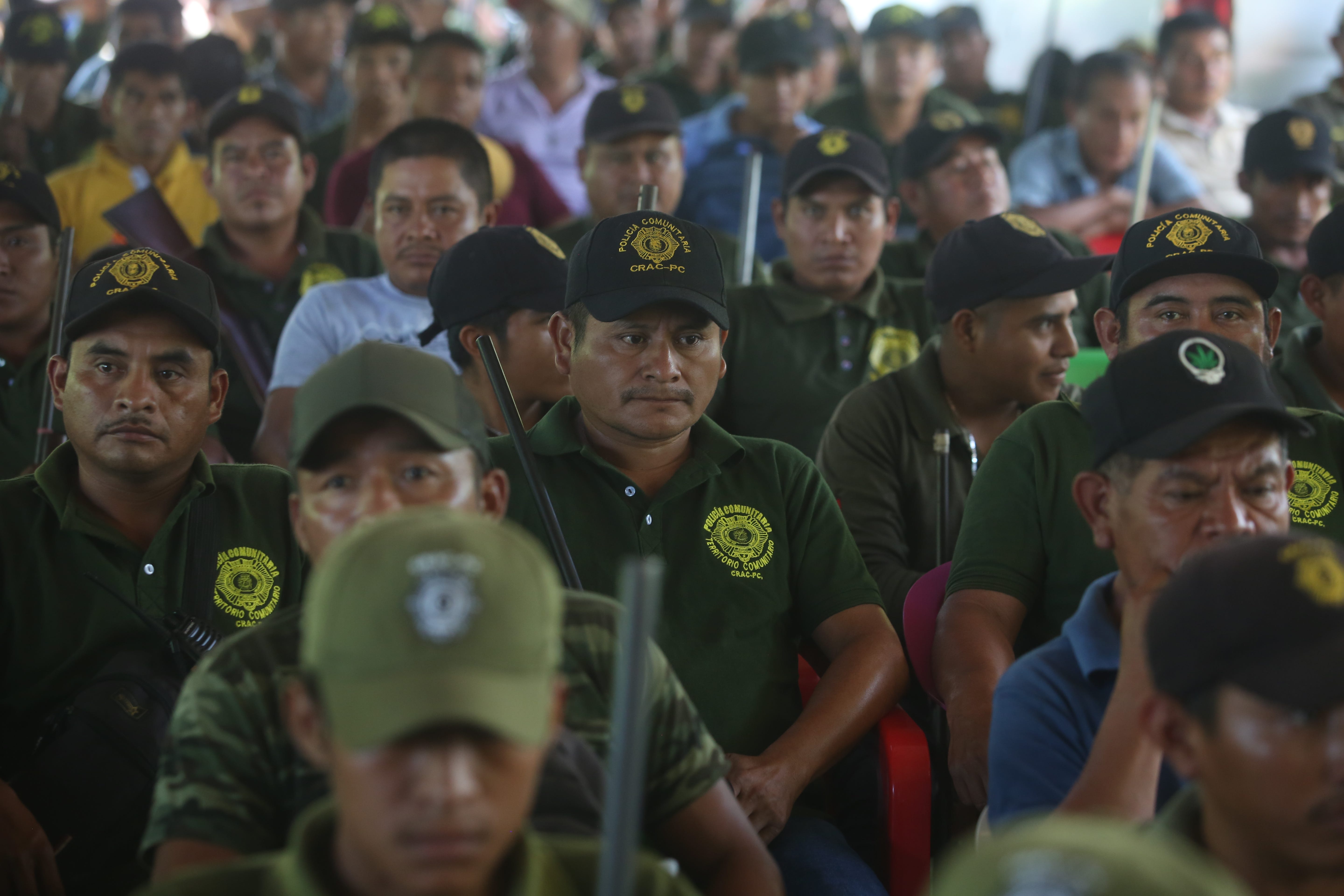
The CRAC-PC (an acronym for the Coordinadora Regional de Autoridades Comunitarias-Policía Comunitaria) is one of the oldest community police networks in Mexico, linking up militias in dozens of villages across the highlands to command thousands of armed officers. They mostly hail from indigenous communities including speakers of Mixtec, Nahuatl, Amuzgo, and Tlapanec (who prefer to call themselves Me’phaa). The CRAC lacks official recognition, has got into conflict with cartels and the army, and many of its officers have faced prison sentences for their activities. Yet they provide security in swathes of Guerrero and operate their own alternate justice system, including running makeshift jails.
“The people were tired of rapes, robbery, murders,” Margarito Ramírez, one of the force commanders or “coordinators” tells us. “With this system, crime has gone down. People are much calmer.”
Mexico’s self-defense forces, or autodefensas, of non-government militias, mushroomed in size in the 2013-14 period, spreading across Guerrero and the neighboring state of Michoacán to fight cartels. The confrontation exploded into open warfare, especially against the Knights Templar mob in Michoacán, with militias building barricades of sandbags and getting into prolonged gun battles.
After the collapse of the Knights Templar in late 2014, and death of its delirious leader, Nazario Moreno, known as El Más Loco or “The Craziest One,” the autodefensa movement splintered. Some handed in their guns, others were deputized into regular police forces, others became fronts for cartels (or “narco-defensas”). However, the CRAC and a few others carried on as community police representing their villages through traditional indigenous assemblies. As cartels such as the Ardillos and Familia displace and drone-bomb villages in the Guerrero mountains, the CRAC doesn’t intend to give up its guns now.
“While the government doesn’t assume its responsibility to provide security to the people, the people will carry on taking care of themselves,” says Juan Antonio García, the regional coordinator of the force in Paraíso. “In the cities, there is a lot of crime and drugs and homicides. But here, there is no kidnapping. There is no charging quota [extortion].”
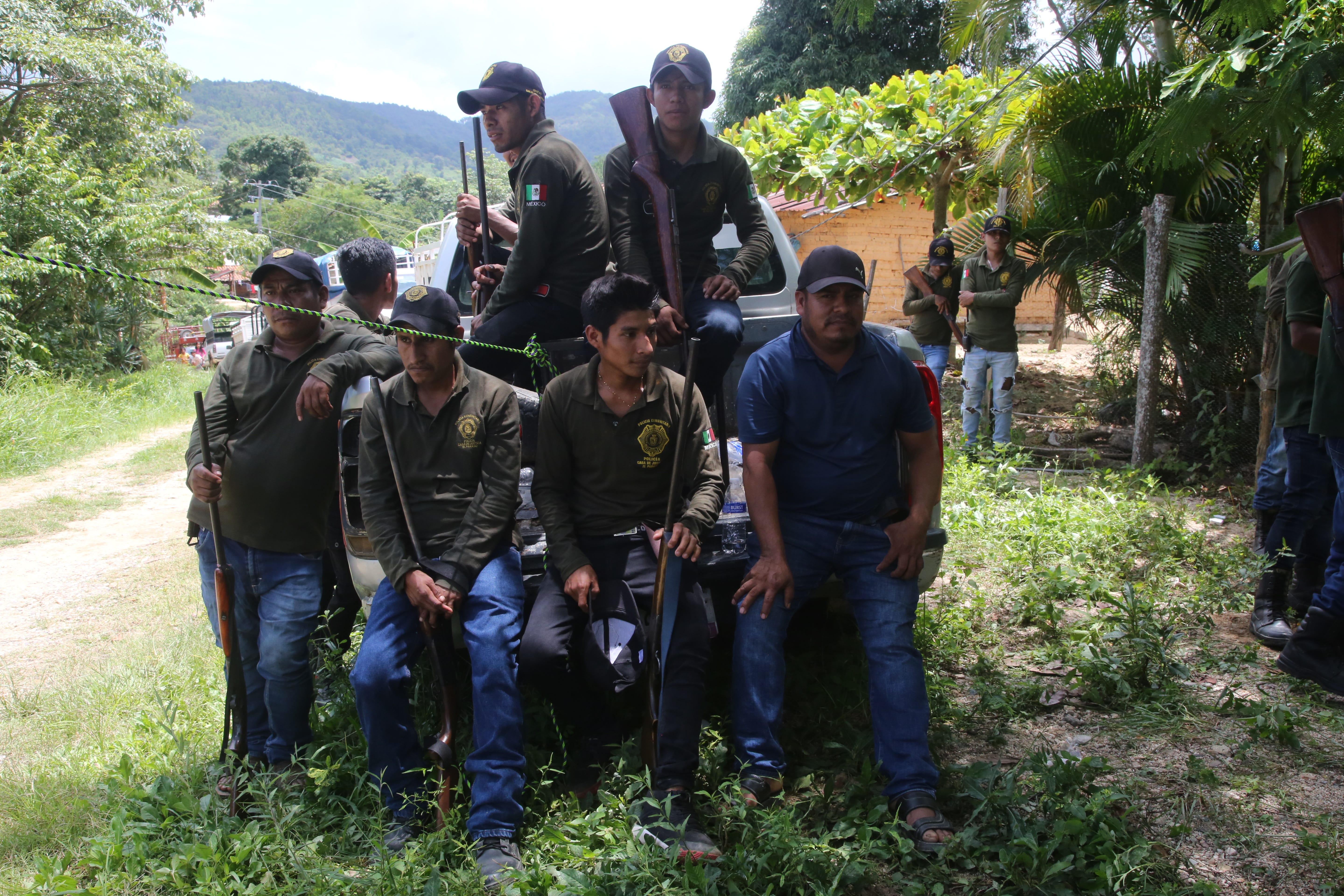
During our visit, the CRAC forces have a regional meeting, with chapters from 27 villages at the base. They are happy for us to take photographs and show their strength. However, they are more guarded in some of the questions we ask about all the weapons they have and confrontations with cartels.
At the back of the base, we visit their jail cells, where we see…
Sorry folks, you need to subscribe to read the rest of this story. But it’s only the price of a cuppa coffee and you get the complete archive including exclusive interviews with top players and maps of cartel territory. And now is a great time to subscribe with so much going on, and I will be following the tumultuous events with reports you can trust.