

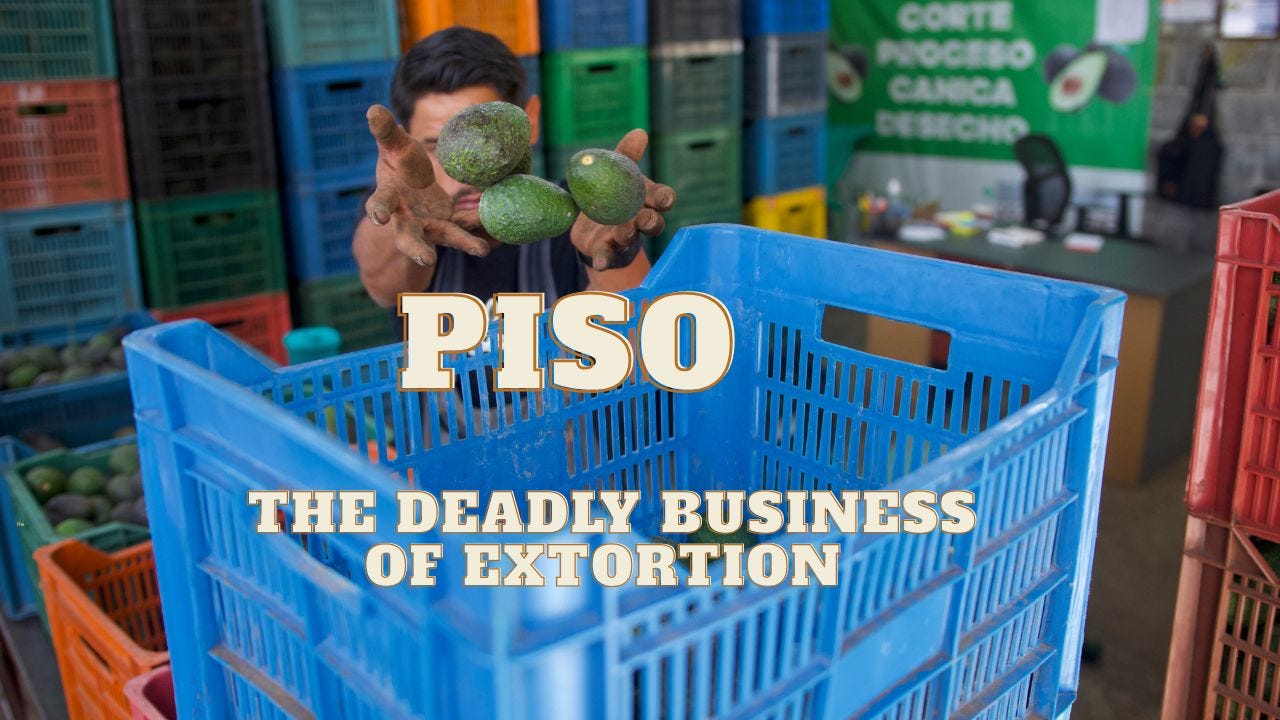
This is part of the series Piso, which digs into the issue of extortion, a crime that has risen to have massive political and economic implications in Mexico but is understudied and tough to report on. Cartels and gangs run extortion rackets across the country, charging businesses large and small what is known as “cobro de piso,” which translates literally as “floor charge.” These “quotas” now compete with drugs as a top racket of cartels, hurts millions of hard-working people and hammer enterprise.
Stories include:
Acapulco - From “Pearl of the Pacific” To Protection Central
Mexico State - Golden Goose For Shakedowns
Mexico’s Soaring “Narco-Inflation”
A History Of Protection Rackets: Can Mexico forge a winning strategy from how other countries battled extortion?
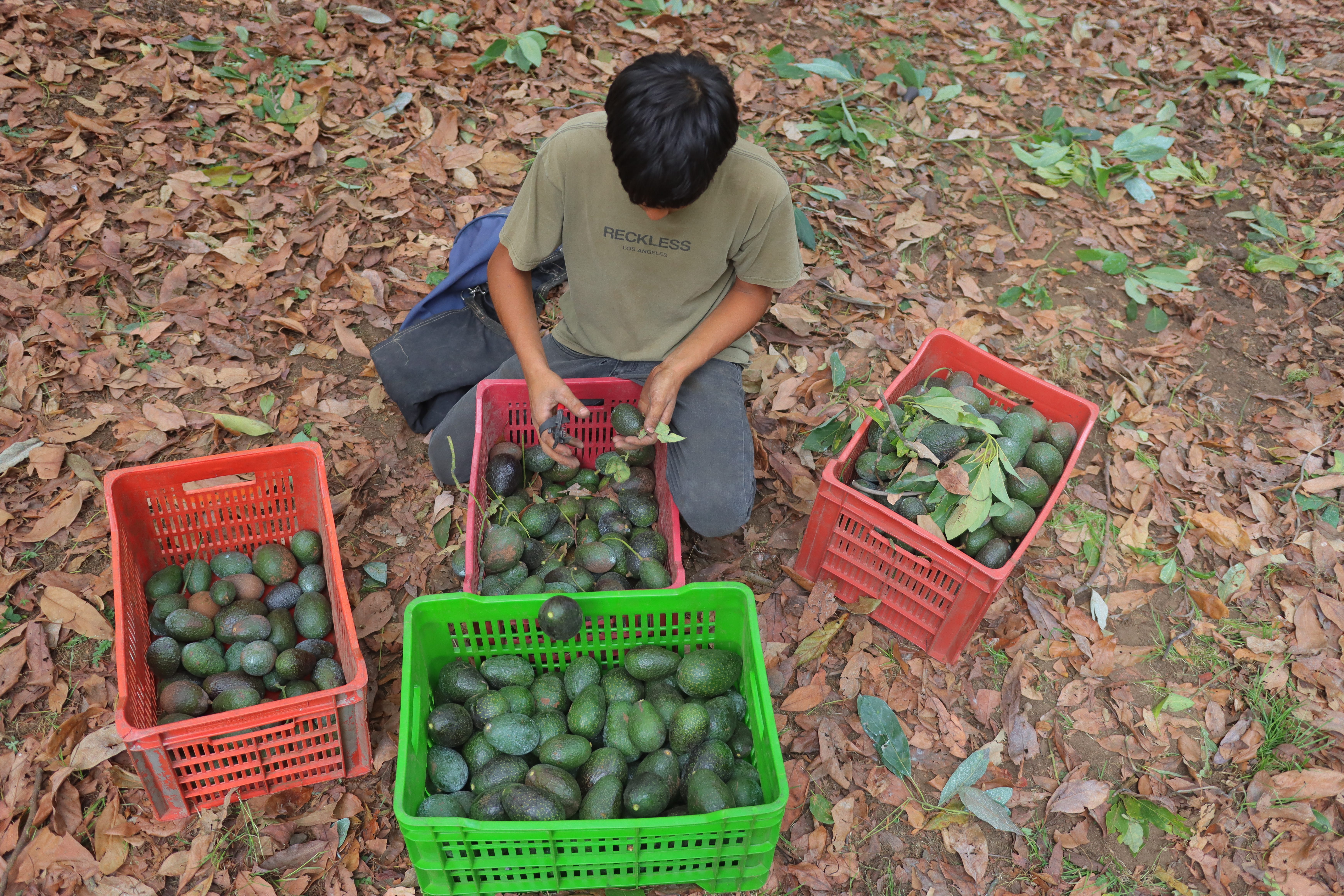
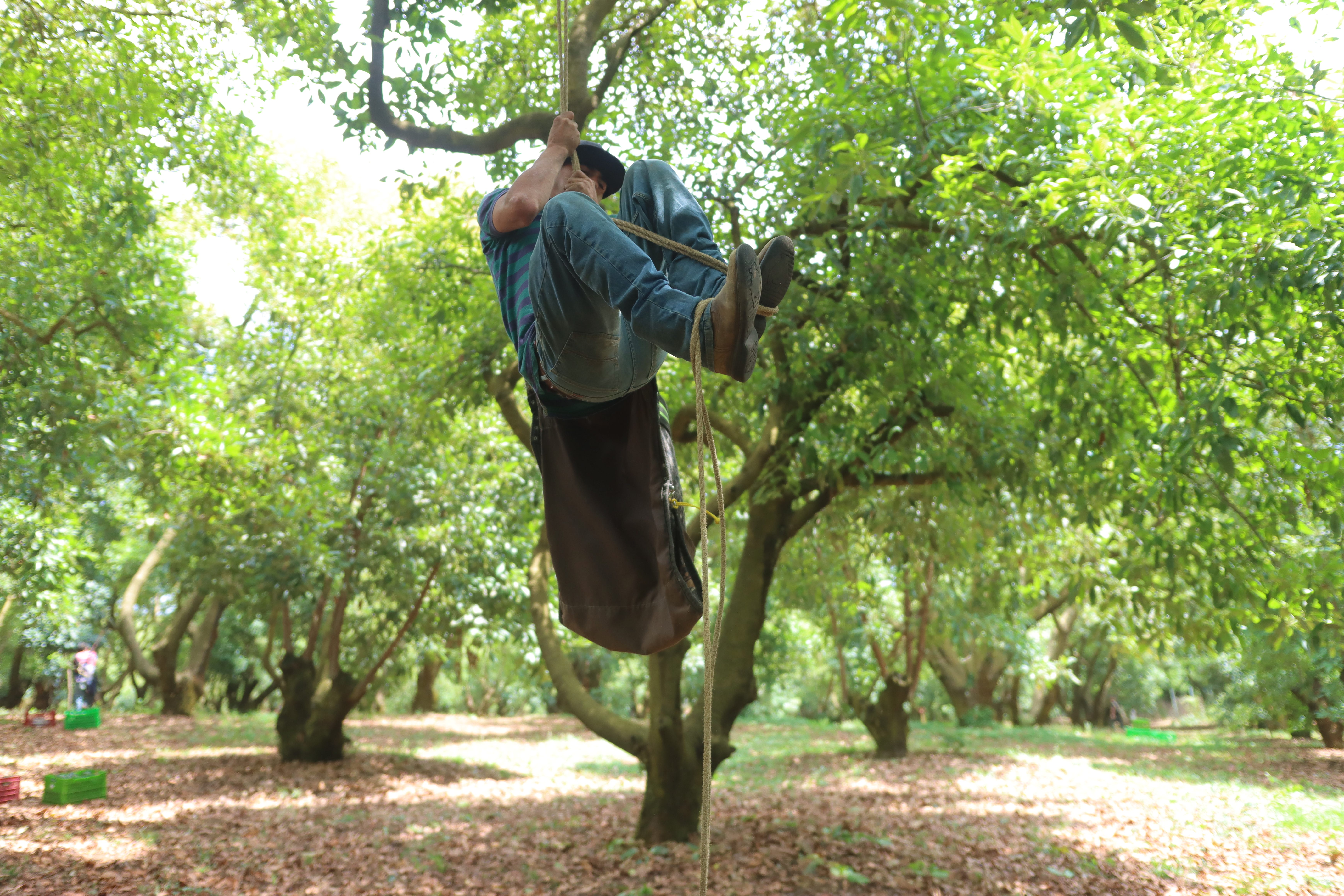
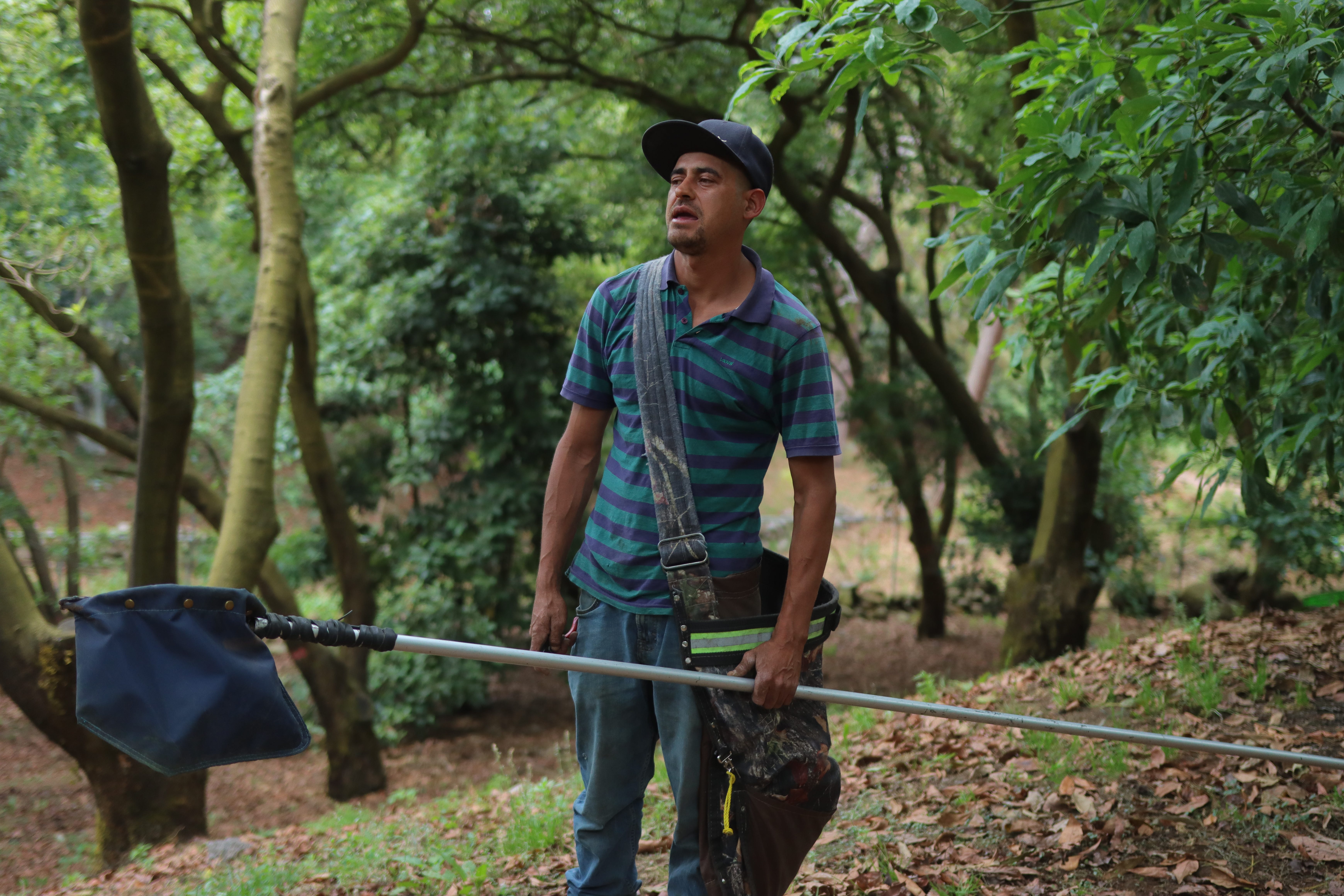
In the sprawling city of Cuautla, gangsters charge buses and taxis a weekly quota, with some even handing out stickers to show who has paid up. In a luxury housing development in Mexico State, mobsters levy developers for the “permission” to build a home. In Uruapan, avocado farmers are forced to cough up for every kilo of the succulent fruit they produce.
Across Mexico, from the unwieldy border city of Tijuana to the steamy seaside resort of Acapulco, from the green hills of Chiapas to the factory town of Toluca, you hear the same story: in the last decade, extortion, or rather protection rackets, have exploded and are hammering small businesses and punishing workers.
President Claudia Sheinbaum signed a law in November hiking sentences for extortionists and her security secretary Omar García Harfuch has ramped up operations against the gangs. But we have yet to see evidence that the problem has been alleviated, and many victims are still terrified to go to the police to report a threat, or even talk about the issue.
Mexico, however, is not the only country to have faced this crime. Looking at how other nations have battled extortion and the nature of the problem could help Mexico develop a strategy to beat this scourge. It doesn’t have to be like this.
Twisting Out and State Building
While protection rackets have affected so many people’s lives, academic work on them is actually quite thin. Benjamin T. Smith (a friend of CrashOut) is one of the few historians to take the issue seriously, teaching about it as part of a fascinating module at the University of Warwick on “A Global History of Organized Crime.”
“It is pretty poor the literature frankly, outside two little groups,” Smith tells me. The first of these groups centers on protection rackets of the Italian Mafia and to some extent Russian Mafia, with work especially from the academics Federico Varese and Diego Gambetta, who authored the classic, The Sicilian Mafia: The Business of Private Protection. The second is on the links to state building, with work by Charles Tilly, including his landmark essay, War Making and State Making as Organized Crime.
The practice of threatening people until they give you money may be as old as money itself. But the word “extortion” comes from the Latin “extorquere,” which means to twist something out of people. It was used to describe how the Roman official Gaius Verres shook down Sicilians for millions of sesterces until he was famously prosecuted by Cicero.
In the dark ages, Vikings shook down Anglo-Saxon cities in England for their Danegeld. When Saxon kings paid off the North Men with piles of treasure it only encouraged them to come back to do more raping and pillaging, and it took several centuries before the English rallied to fight them off under Alfred the Great.
Later medieval marauders included the bloodthirsty Border Reivers, who rampaged on the England-Scotland borderlands. When farmers paid off the Reivers not to raid them it became known as black mail, as opposed to “white mail” rents collected by land owners.

According to state-building theory, these primitive predators were key in constructing nation states. Armies provide defense against sadistic thugs like Vikings, but the states themselves demand money to pay for this protection.
“Warring kings basically said to their merchants, ‘You’ve got to support us or we’ll let the king next door take all your cash,’ ” Smith says. “So the state itself, or the financial institutions of the state, are caused by extortion normally under the pressure of war.”
Tilly argues that governments really emerged from these violent origins and that the social contract idea was a myth that came about later. As he says in his essay:
“A portrait of war makers and state makers as coercive and self-seeking entrepreneurs bears a far greater resemblance to the facts than do its chief alternatives: the idea of a social contract, the idea of an open market in which operators of armies and states offer services to willing consumers.”
This will appeal to libertarians who are against federal taxes, although I personally have more sympathy with the idea that the modern state provides vital services like hospitals and schools. Either way, when gangsters charge protection they are undermining the government and its monopoly on violence. Mexican business lobbies have legitimately questioned why they should pay tax if they also have to pay piso under threat of death.

“I wouldn’t want anything to happen to your shop!”
The Sicilian mafia, the reference point for modern organized crime, was born in the nineteenth century by mobsters shaking down citrus farmers, according to a history by John Dickie. “Once in control of a fondo [lemon grove] the mafiosi could steal as much as they liked, whether with the aim of raking off a comfortable parasitic ‘tax,’ or in order to buy it for themselves at an artificially low price,” Dickie writes in his book Cosa Nostra.
However, rackets became so entrenched in southern Italy, according to Gambetta, because the mafia provided authentic protection in certain industries that were not well regulated. One example was buying cattle in Sicily, in which both the breeder and butcher were suspicious of being ripped off.
“Protection can nevertheless be a genuine commodity and play a crucial role as a lubricator of economic exchange,” Gambetta writes. “In every transaction in which at least one party does not trust the other to comply with the rules, protection becomes desirable, even if it is a poor and costly substitute for trust.”
Italian immigrants took the tactic to the United States, sending pictures of black hands to Italian-owned businesses, meaning they had to pay up or suffer. This developed into more extensive extortion by the Chicago Outfit, not only in grey markets like strip clubs but in many bars, restaurants and even Hollywood Studios.
Both the United States and Italy ultimately beat back the mafia with a two pronged approach, coming from above and below. “When you have strong federal plus strong civil society working together, it’s basically caught in a pincer movement,” says Smith.
U.S. prosecutors wielded powerful laws including RICO, the Racketeer Influenced and Corrupt Organizations Act, with which they can rope hundreds of people into a criminal conspiracy and lock them up for decades. Businesses backed these police efforts, going back to a society of Italian businessmen in Chicago resisting extortion known as the Mano Blanca, or White Hand, as reported in this historic New York Times piece.
Despite assassinations of prosecutors, Italy held mass trials of mafiosi, including the Maxi Trial, which concluded in 1992 with the conviction of 338 mobsters. Such efforts continue, with a court assembled in a call center in the town of Lamezia Termein in 2023 to sentence more than 200 'Ndrangheta operatives.
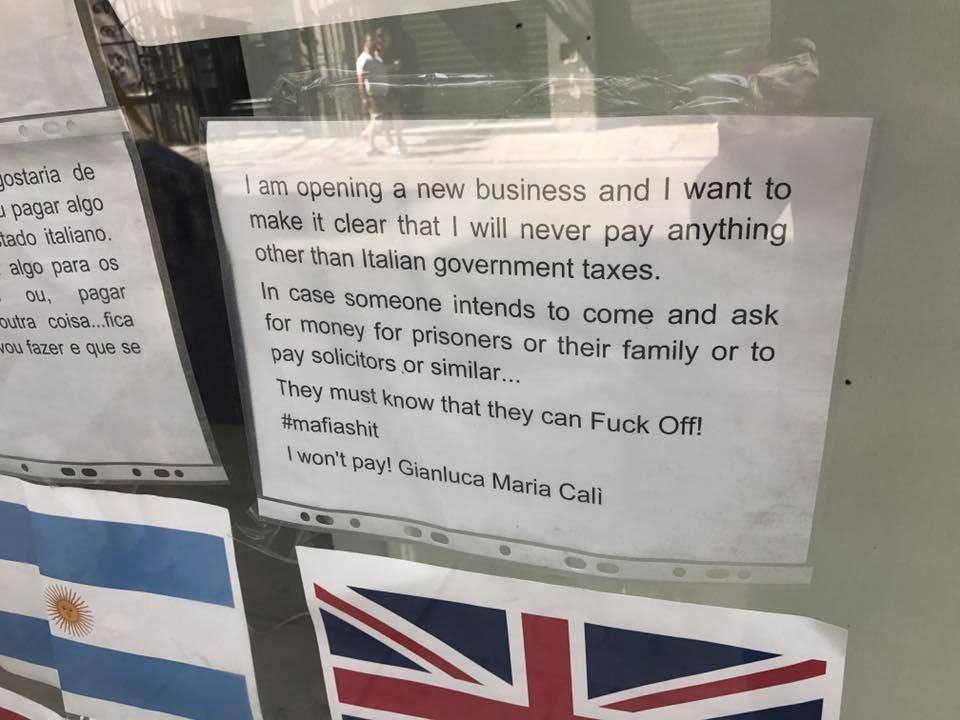
Yet grass root efforts are also key. In Sicily, the Addiopizzo movement was born in the noughties to rally businesses to stop paying the mafia (the Italian term pizzo means the same as the Mexican term piso, although they have different origins). An Addiopizzo founder Edoardo Zaffuto described how it began to CrashOut’s Niko Vorobyov.
“There was a large part of shopkeepers and entrepreneurs in Palermo who accepted to pay the pizzo without thinking; everybody was aware of the consequences of refusing to pay, and so it was kind of normal,” Zaffuto said. “Addiopizzo was born from a group of young people, seven boys and girls, who had an idea to start a business in Palermo, in particular a pub, and one of them actually wrote the term pizzo on the business plan. They realized how unacceptable and crazy it was that in Palermo, pizzo was considered normal. ”
The movement mushroomed and now many businesses openly oppose mafia shakedowns, displaying signs such as these.
However, some extortion still lingers on in both countries, and Smith points out that many mafiosi in the United States and Italy transferred their cash into the massive legitimate economies.
In El Salvador, the maras, from both the MS-13 and Barrio 18 gangs, carried out widespread extortion of buses, taxis, small shops and even day laborers. It’s notable that the country had little drug trafficking, which meant gangs preyed on the population for their funds. This made Salvadorans more willing to vote for a strongman.
Nayib Bukele carried out one of the world’s biggest mass incarceration campaigns, which has been popular and effective but slammed for trampling on civil rights. This week, Bukele announced that he could release half of those imprisoned during his four-year long state of emergency, although rather than saying they were innocent he claimed to be talking about gang “collaborators” who had served their time.
Why Does Mexico Struggle?
In contrast to Salvador, Mexico is one of the biggest countries in the world for drug trafficking. But while for decades, gangsters focused on narco profits they now operate both drug routes and extortion rackets. Smith explores in this story how cartels were formed by running protection on smaller narcos then extended this to other businesses.
Mexico has also long had corrupt officials who shake down businesses such as bars, threatening them with closure (a dreaded clausurado sign) if they don’t pay. Over the last two decades, cartels have simply taken over many of these government shake-downs.
A huge challenge for García Harfuch is that many people don’t trust the police and are scared to report extortion. This is not paranoia but real fear: these records from the cellphone of a cartel plaza boss show how officers will send witness statements directly to the bad guys. High-level corruption cases, such as a U.S. indictment of the governor of Sinaloa, make many fear that narco power persists despite García Harfuch taking down some top mobsters.
Still, there has to be path out the swamp. On one side, there needs to be law enforcement that really identifies the most problematic gangsters and builds lasting cases against them. “I don’t think you can do this with the army,” Smith says. “You need a proper judiciary and a proper federal police, a version of the FBI.”
On the other side, there needs to be activity from the grass roots to resist payment. As I describe in stories from Guerrero there are already both armed citizen groups and unarmed groups combating crime on the ground. Could there also be a rise of businesses that mount their own “adios piso.”
It’s tough when you have cases such as Bernardo Bravo, a leader of lime growers in Apatzingán, who was murdered after he denounced extortion. Yet if there was massive resistance to quotas, backed by the government, then an environment could be created where people were empowered not to pay. It’s a tough road. But will businesses just go on paying mobsters their hard-earned money for ever?
Thanks for supporting true independent media
The series Piso is produced by CrashOut Media with the support of Transformative Incorporated - thanks there Transformative for reading CrashOut and getting involved.
All photos by Eric Sánchez, except photo 6 by Niko Vorobyov.
Copyright Ioan Grillo and CrashOut Media 2026

The success of the Addiopizzo was also due to it's collaboration with the Carabinieri, which at one time was part of the Italian army but is now a separate military and enforcement arm allowed to investigate anywhere in Italy and is used for international duties. Carabinieri is an investigative unit combined with a SWAT type mobile military unit.
The Carabinieri was the enforcement arm for Addiopizzo's protests against extortion and provided the necessary muscle and violence to protect the businesses and citizens that were refusing to pay the extortion fees. Carabinieri's methods were quick in response and if necessary violent to discourage any criminal response to the non-payment of extortion fees. To join the Addiopizzo, you could be assured and trust the protection that would be provided by the Carabinieri. This is an excellent example of the trust and partnership that has to be established between top down enforcement agencies and the local businesses and citizens. Any hint of corruption and collusion between the criminal organizations and law enforcement would destroy any attempts to stop extortion and protection rackets.
Mexico, because of it's extensive corruption among the highest officials in state and federal government , citizens cannot trust any hope of assistance from any law enforcement from the local to the state and federal level. Big businesses in Mexico have circumvented the governmental corruption by paying the extortion fees and incorporating these payments into a higher cost of the product they are selling. Wal-Mart's expansion in Mexico is a perfect example of a large corporation paying bribes and other criminal fees for doing business in their territory. Considering the economic power of Wal-Mart, you can easily assume payments were made to prominent political officials. You are taking your life for granted assuming any support from the top in Mexico. There is no Carabinieri type unit in Mexico that anyone could trust and that points to the only possible solution in the future. Local establishment of alternative enforcement groups, whether self-defense groups or local police pacts with these self defense groups. The local police are severely corrupted but living locally they maybe encouraged to take an independent stand but only if the self-defense groups are supported and well armed.
All around the world you can find examples of effective cooperation between armed enforcement and local citizens. Academics tend to avoid the examples where vigilante justice is applied by the locals and the armed groups of official and unofficial capacity. That type of justice is needed to instantly gather support and the trust of the victims of this economic tyranny. Every example around the world shows that walking patrols, surveillance, 24 hour protection and rapid response to criminal attempts were the ingredients for success. Expanded judiciary and a new type of FBI in Mexico will not solved the problem especially when the new Federal solution is increased prison sentences. You have to make the attempt to apprehend them first for that so-called solution to work.