
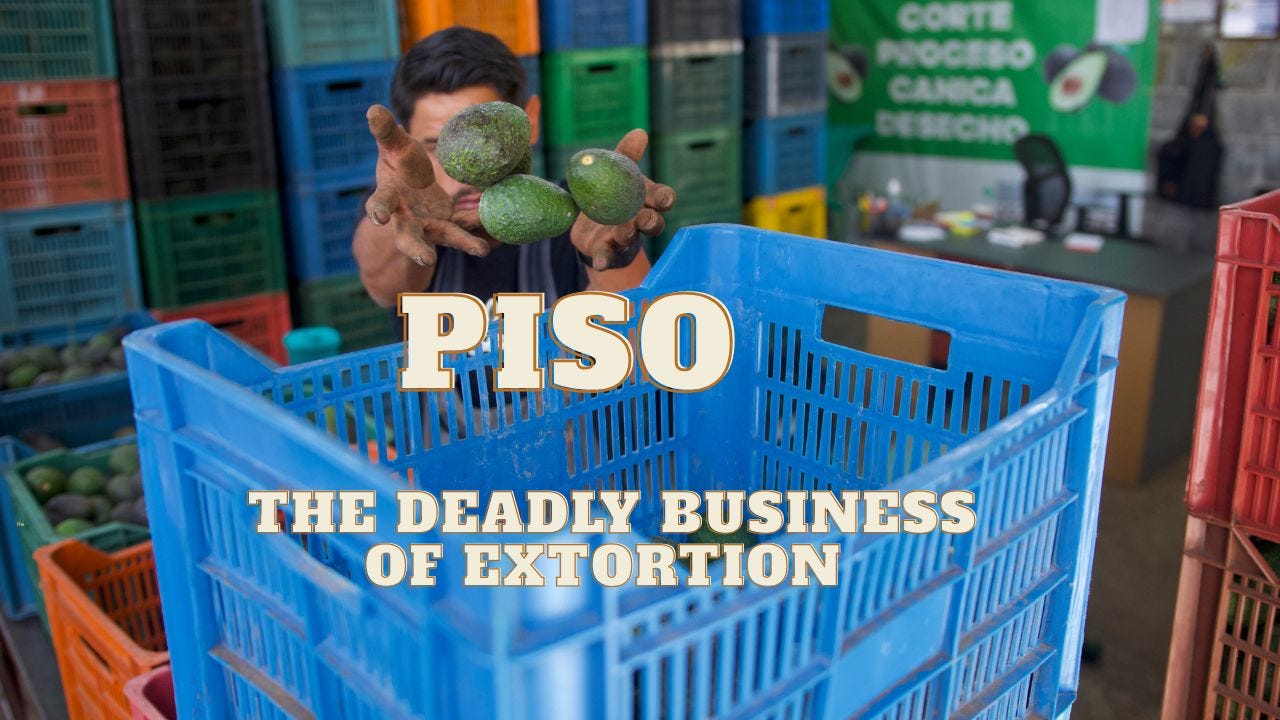
This is from the series Piso, which digs into the issue of extortion, a crime that has risen to have massive political and economic implications in Mexico but is understudied and tough to report on. Cartels and gangs run extortion rackets across the country, charging businesses large and small what is known as “cobro de piso,” which translates literally as “floor charge.” These “quotas” now compete with drugs as a top racket of cartels, hurts millions of hardworking people and hammer enterprise.
Stories include:
Mexico State - Golden Goose For Shakedowns
Mexico’s Soaring “Narco-Inflation”
Acapulco - From “Pearl of the Pacific” To Protection Central
In the early hours of Sept. 3, Mexican marines and federal agents stormed into the Victoria Luxury Club night spot in the city of Puebla to nab Govén Ulisses Chávez, alleged to be a boss of an Acapulco mafia known as “Los Rusos.” At the same time, troops stormed nearby buildings including a showroom to seize 39 luxury cars alleged to belong to “El Govén,” among them a McLaren 720S Coupé worth about $300,000. Public Security Secretary Omar García Harfuch personally announced the arrest of Chávez, known as “El Govén” or “El Amarillo,” saying he would be charged for crimes including extortion.
Govén was alleged to be running a money laundering operation in Puebla to wash earnings that the Rusos squeeze out of Acapulco from both protection rackets and drug selling. (While Rusos means Russians, the mob has no relation to the country and it’s different from another criminal faction called the Rusos operating in Mexicali). The arrest of Govén was a significant blow to the mob that has been demanding “quotas” for everything from beach bars to taxis to private schools in the seaside resort.


The Rusos did not take the arrest well. On Sept. 5, thugs dumped the corpse of a National Guardsman on the federal highway from Acapulco. On Sept. 7, operatives hung up banners around Acapulco, taking credit for the murder of the guardsman, demanding the release of Govén and ordering army patrols away from certain areas of the resort where they operate. They also threatened García Harfuch personally.
“We are going to fuck you up,” (“dar en tu madre”), it said on a banner. “We are not going to miss like the four letters,” it went on, referring to an attempt by the Jalisco New Generation Cartel to assassinate García Harfuch in 2020.
The case shows how mobs built off extortion are not just local gangs but have become powerful players in Mexico’s bloody crime environment and how a campaign led by García Harfuch to go after extortionists faces a significant challenge. It also highlights how Acapulco, once the showcase of Mexican tourist resorts dubbed as the “Pearl of the Pacific,” continues to be ravaged by organized crime, which is hitting other Mexican resorts from Tulum to Cancún.

The Rise and Fall Of Acapulco
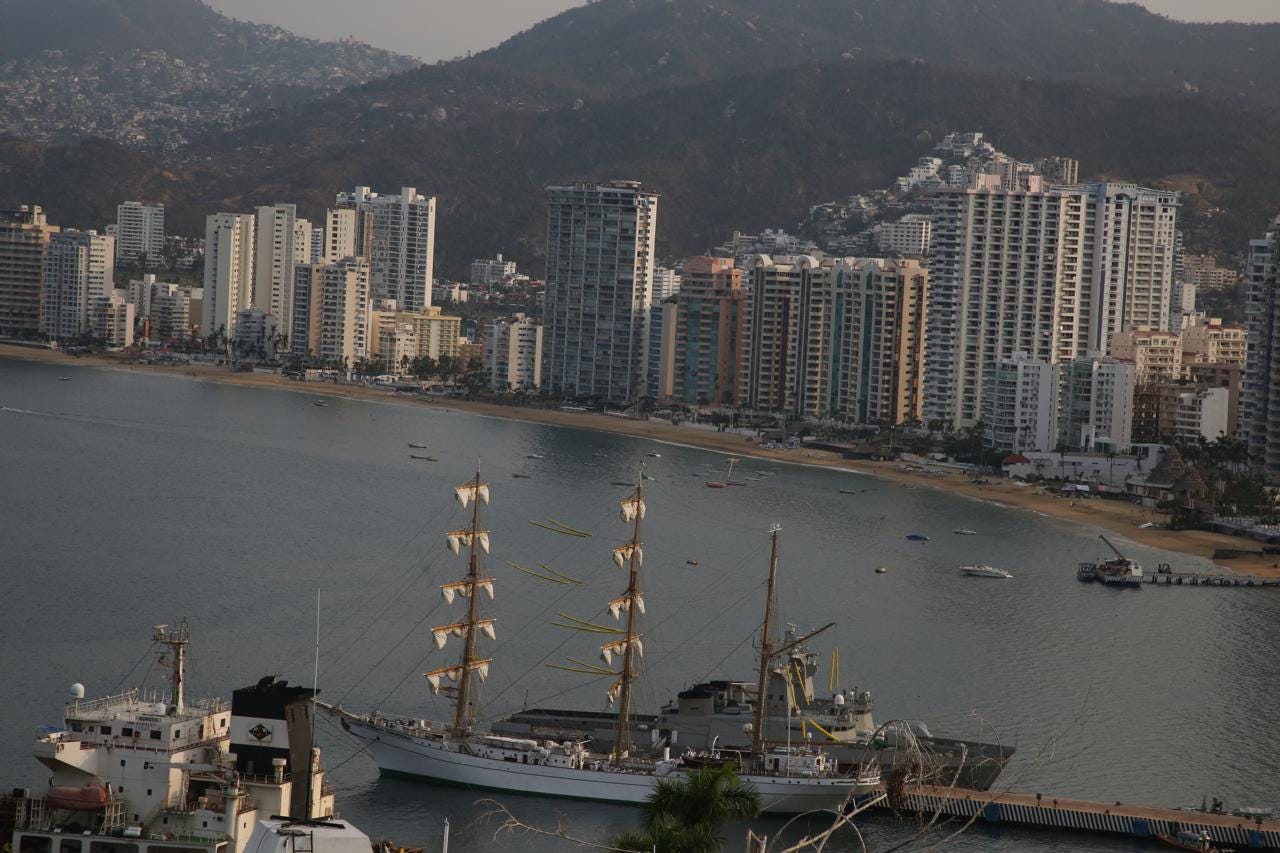
Blessed with a stunning natural bay, Acapulco was an elite spot for movie stars from the 1940s to the 1960s, with Frank Sinatra, Elizabeth Taylor and Brigitte Bardot sunning on its sands. Tarzan star Johnny Weissmüller built his round pink Casa de Tarzán in Los Flamingos hotel, and Elvis filmed Fun In Acapulco in 1963.
In the seventies, Acapulco became the blueprint for mass tourism across Mexico, with hotels cramming up the bay and along the open Pacific coastline to the north and south. By the 2000s, foreign tourism had largely moved onto newer resorts at Cabos and Cancún but Acapulco boomed with Mexican vacationers, with the Highway of the Sun slicing through the mountains to get you to Mexico City in four hours. Then the cartel wars hit.
The state of Guerrero produced its famous Acapulco Gold marijuana from the sixties and opium poppies flowered there in the seventies to provide for the post-Vietnam heroin surge north of the border. Kingpins liked to buy luxury houses in the resort, and in 1989, a famous narco conference was reported to take place in Las Brisas hotel, in which the plazas (turfs) across Mexico were handed out to capos, including Chapo and the Arellano Félix brothers.
In the early 2000s, Sinaloa godfather Arturo Beltrán Leyva became the king of Acapulco, and his hitmen policed the plaza there. However, his monopoly was broken in 2005 when the Zetas mob, led by former Mexican special forces, cut into the city. What might have been the first narco splatter video was filmed in Acapulco in 2005, of Zetas being murdered. The following year, the Zetas carried out one of the first beheadings in the Mexican Cartel Wars, of two Acapulco police officers.
When Mexican marines shot dead Beltrán Leyva in Cuernavaca in 2009, his empire that stretched from Mexico City through Morelos and Guerrero states to Acapulco shattered into fragments. Dozens of gangs emerged in the pieces including the self-proclaimed Independent Cartel of Acapulco, or CIDA. While these new mobs lacked the global scope to move cocaine from Colombia to the United States, they turned to local drug selling and extortion.
The Rusos were born from a splinter of the CIDA in about 2016. Since then, they have expanded across the Acapulco urban area, and pushed south along the Costa Chica, into the Afro-Mexican heartland of Cuajinicuilapa and over the state border into Oaxaca. While the Rusos have eliminated many of the smaller problematic gangs in Acapulco, they create the new challenge of a larger mob that can face down the government.
Everybody Pays
Acapulco is a lucrative plaza to sell drugs, with vast numbers of clubs and bars and many tourists getting high on holiday. Yet the huge market of cobrando piso, or charging protection to businesses, is likely worth more money. As in other cities that I profile like Cuautla and Toluca, gangs charge quotas to small shops. But the nature of a holiday resort makes it especially vulnerable to shakedowns with so many taxis catering to tourists, while the abundance of bars and night clubs are seen by gangsters as a legitimate target. The same logic leads to cartel extortion in Cancún and Tulum.
While official numbers on extortion are weak, there are worrying indicators. The leader of the business lobby Canaco-Servytur, Miguel Álvarez, said last week that small shops and market stalls are still forced to pay quota on a huge scale, despite government claims that extortion has dropped. “There are zones of Acapulco where extortion is the daily bread,” Álvarez said.
A taxi driver speaking to the outlet NMás said that almost all of the thousands of taxi drivers in the Acapulco area have to pay a quota, of about 150 pesos (or $8.75) a week. This relatively small charge allows individual taxis to stay in business but collectively provides a large stream of income to organized crime. The driver said that cartels also demand drivers act as look outs and cartel operatives demand free rides.
Shakedowns also hit schools in Acapulco, with gangs charging private school directors or even just humble teachers for a cut of their salary. Last year, Guerrero state education secretary José Luis González de la Vega conceded that more than 50 schools in Acapulco had temporarily or permanently suspended classes over extortion.
Bars, clubs and restaurants in the tourist zones are charged bigger fees and so are coveted targets of gangs, who also use them to sell drugs. Many arson attacks and murders are attributed to this racket, although they are rarely solved; a few of many examples are here, here, and here.
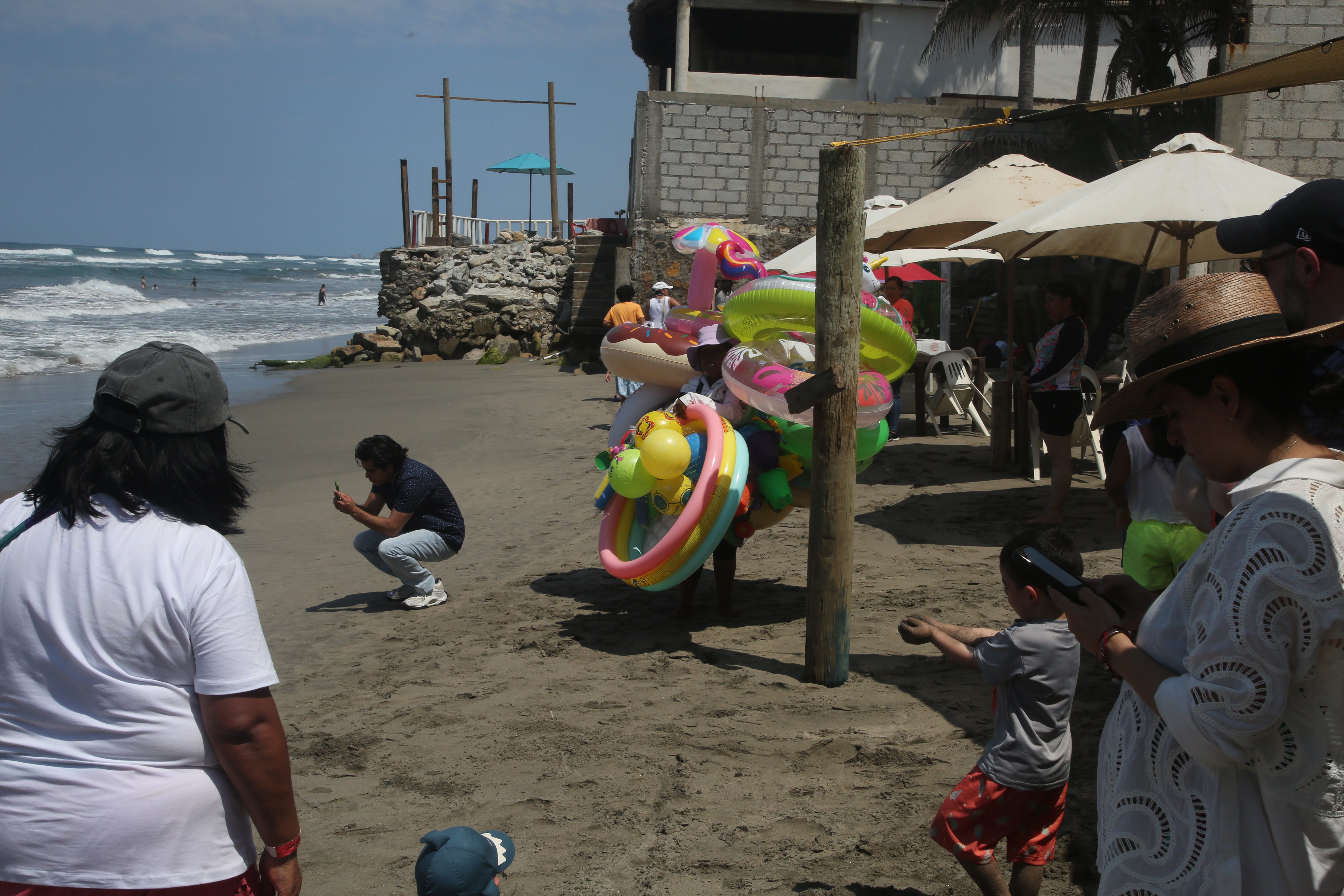
Piso even hits the struggling vendors who walk up and down the beach selling trinkets to tourists. In June, federal forces arrested 11 people alleged to be part of a group that charged beach workers a fee under threats of kidnappings and beatings. Extortion has become democratic, hurting rich and poor alike.

Fight Back
Security chief García Harfuch is fighting piso through a so-called National Strategy Against Extortion, which involves going after mid and high level operators, such as Govén. Over the last year, security forces have genuinely arrested dozens of such targets across the country. The cases against them are boosted by an anti-extortion law signed by President Claudia Sheinbaum in November that hikes prison sentences for extortionists up to 25 years.
But the latest case shows how difficult cartels are to dislodge from these rackets once they are entrenched. The banners displayed by the Rusos in Acapulco listed specific areas that they demand to keep operating. “We don’t want to see any of your puta [damn] patrols in San Marcos, Tres Palos, Zona Diamante, Puerto Marquéz, Barra de Coyuca, Pie de la Cuesta, Xaltianguis,” it said.
Former Mexican security official Ghaleb Krame writes how this statement shows how the cartel is trying to get the government to concede it turf. “The author isn’t only saying that they don’t want to see patrols. He is trying to establish a border. The implicit idea is that these zones are an area under their control and the presence of security forces constitutes an incursion,” Krame says.
Even while Mexican security forces are nabbing high level players behind extortion, many business owners are still terrified to go to the police, with a legitimate fear that they could be revealed as a witness to the cartel. An Acapulco photographer described to me going to a murder scene of a shopkeeper where the mother of the victim was berating the police saying he had gone to them for help.
On the edge of Acapulco, I go to a barrio known as Ampliación Yoloxóchitl, one of the worst areas of the city with dirt roads that get buried by landslides, almost no running water and many houses without electricity. While it’s hard for cartels to squeeze any money out of such poverty, they use it as a dumping ground for victims, and residents describe how corpses were pasted to trees with metal stakes through the neck.
Showing us round the barrio is community activist Rosario Merlín García, a former federal deputy for the ruling Morena party. Rosario tells me you have to alleviate such poverty if Mexico wants to stop extortion as this is where gang members are recruited from.
“They get the youths easily. They say, ‘If they are paying you 200 or 300 pesos, we will pay you 3,000 pesos or week.’ But then it’s difficult for them to leave because they know too much,” Rosario says. “But why do they charge quotas?” she asks. “They need money. We need to organize them. What do they want to learn to do?…All those that are charging quotas, why don’t we train them. Then instead of charging quotas they could be productive.”
I think Rosario has a valid point. Yet extortion has created a vicious circle where people are discouraged from starting a business precisely as this makes them the target of cartels. There is a struggling economy, which makes people turn to crime, which in turn damages the economy. The challenge for the Mexican government is to break this cycle. And a real test of success is not just for a gangster like Govén be behind bars; it’s when regular people are not terrified to denounce that the cartels are charging them piso.
Thanks for supporting true independent media
The series Piso is produced by CrashOut Media with the support of Transformative Incorporated (thanks there Transformative for reading CrashOut and getting involved). More info to follow.
All photos by Javier Verdin, except 2 and 3 (of seized cars) from Secretaría de Seguridad y Protección Ciudadana. Thanks also to Servando Mellin for contributing work in Guerrero.
Copyright Ioan Grillo and CrashOut Media 2026